
An Interactive VR Still Life
Solo Project
Role: VR Experience Designer & Developer
Duration: 4 weeks (2026)
Tools: Created in Unity for Meta Quest 3, C# coded with Claude
Art Is Full of Meaning We Miss
Dutch Still Life Paintings
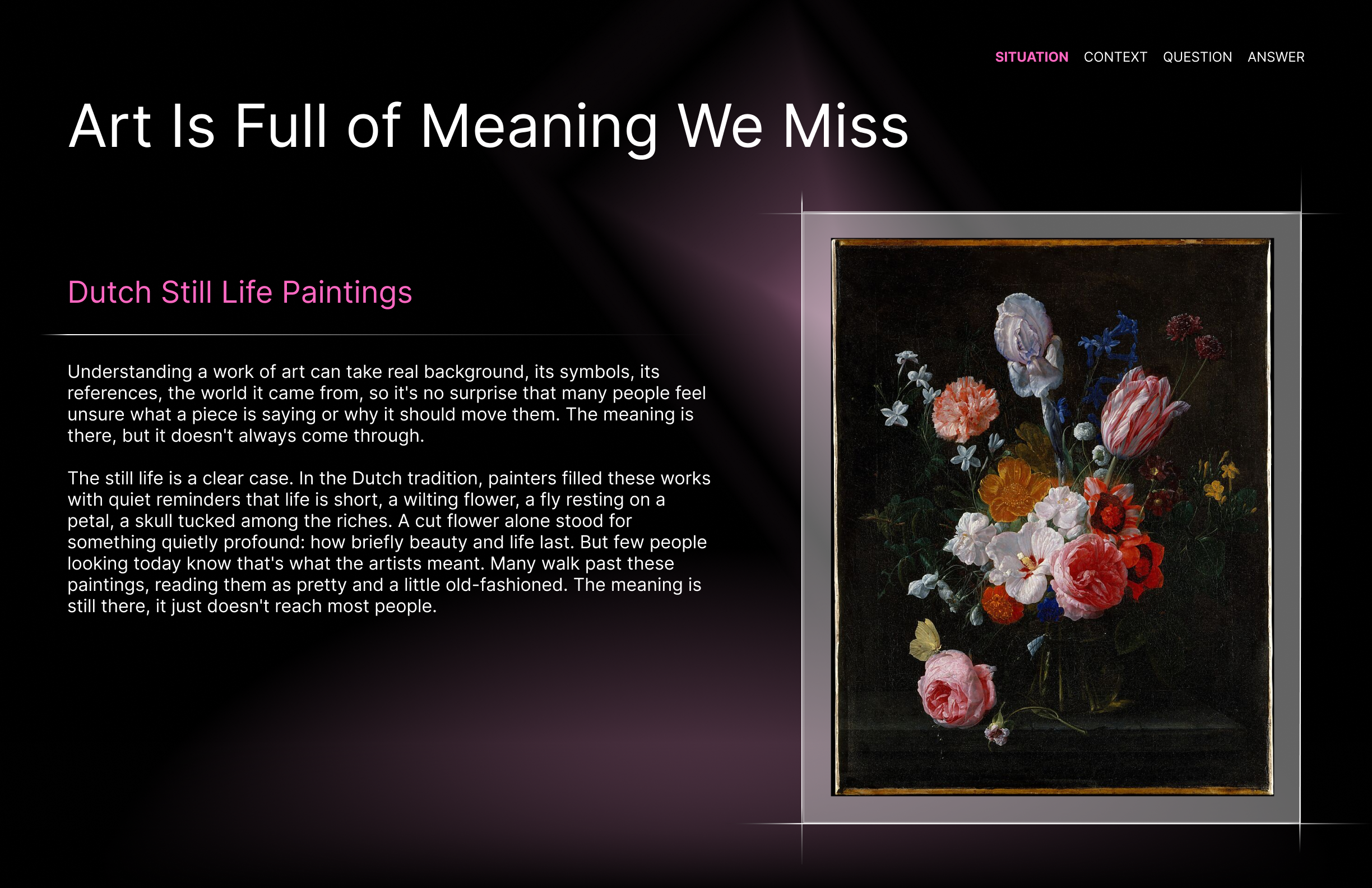
Understanding a work of art can take real background, its symbols, its references, the world it came from, so it's no surprise that many people feel unsure what a piece is saying or why it should move them. The meaning is there, but it doesn't always come through.
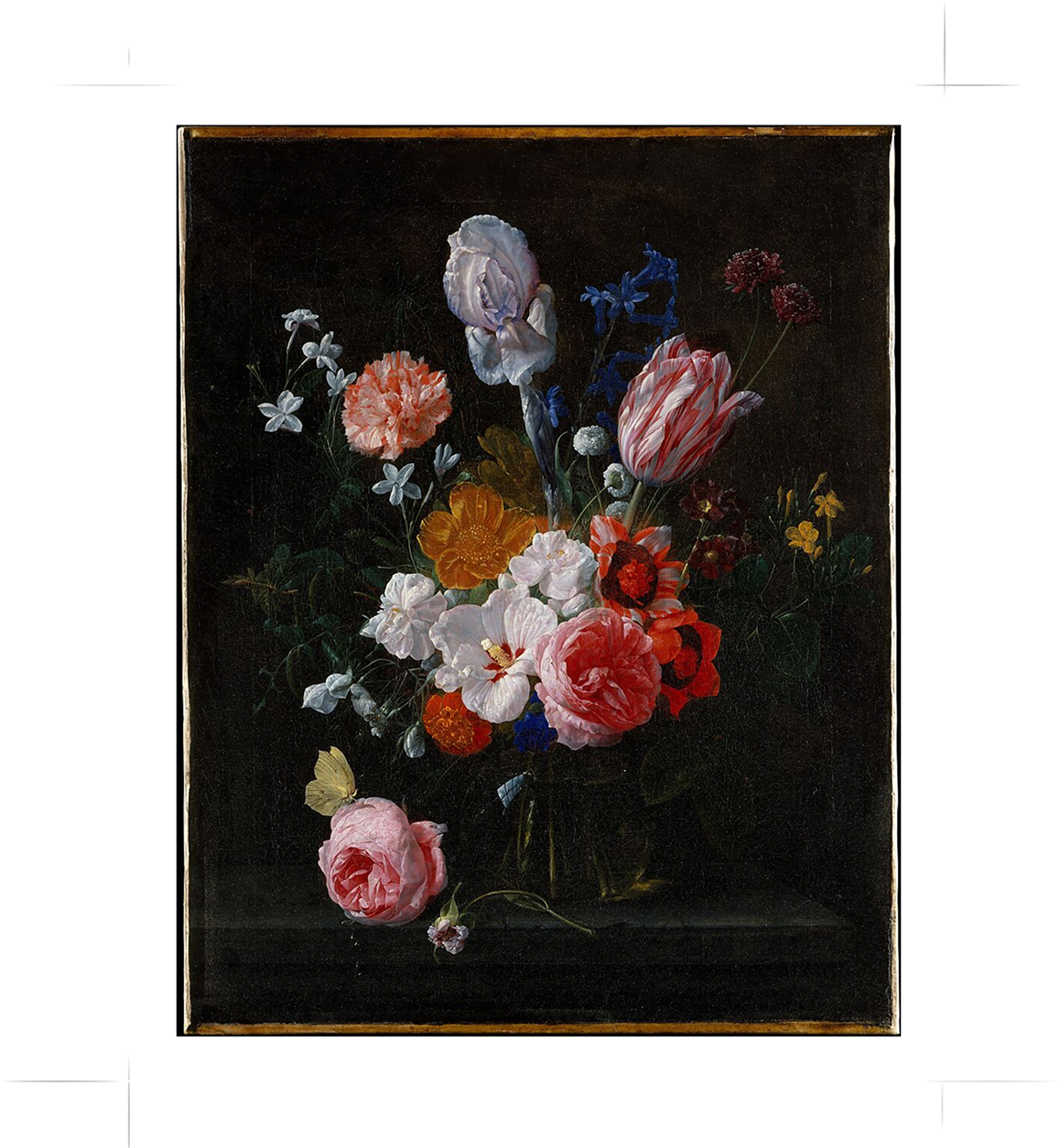
The still life is a clear case. In the Dutch tradition, painters filled these works with quiet reminders that life is short, a wilting flower, a fly resting on a petal, a skull tucked among the riches. A cut flower alone stood for something quietly profound: how briefly beauty and life last. But few people looking today know that's what the artists meant. Many walk past these paintings, reading them as pretty and a little old-fashioned. The meaning is still there, it just doesn't reach most people.
Why Flowers Carry Meaning
The Ideas Behind Arrange
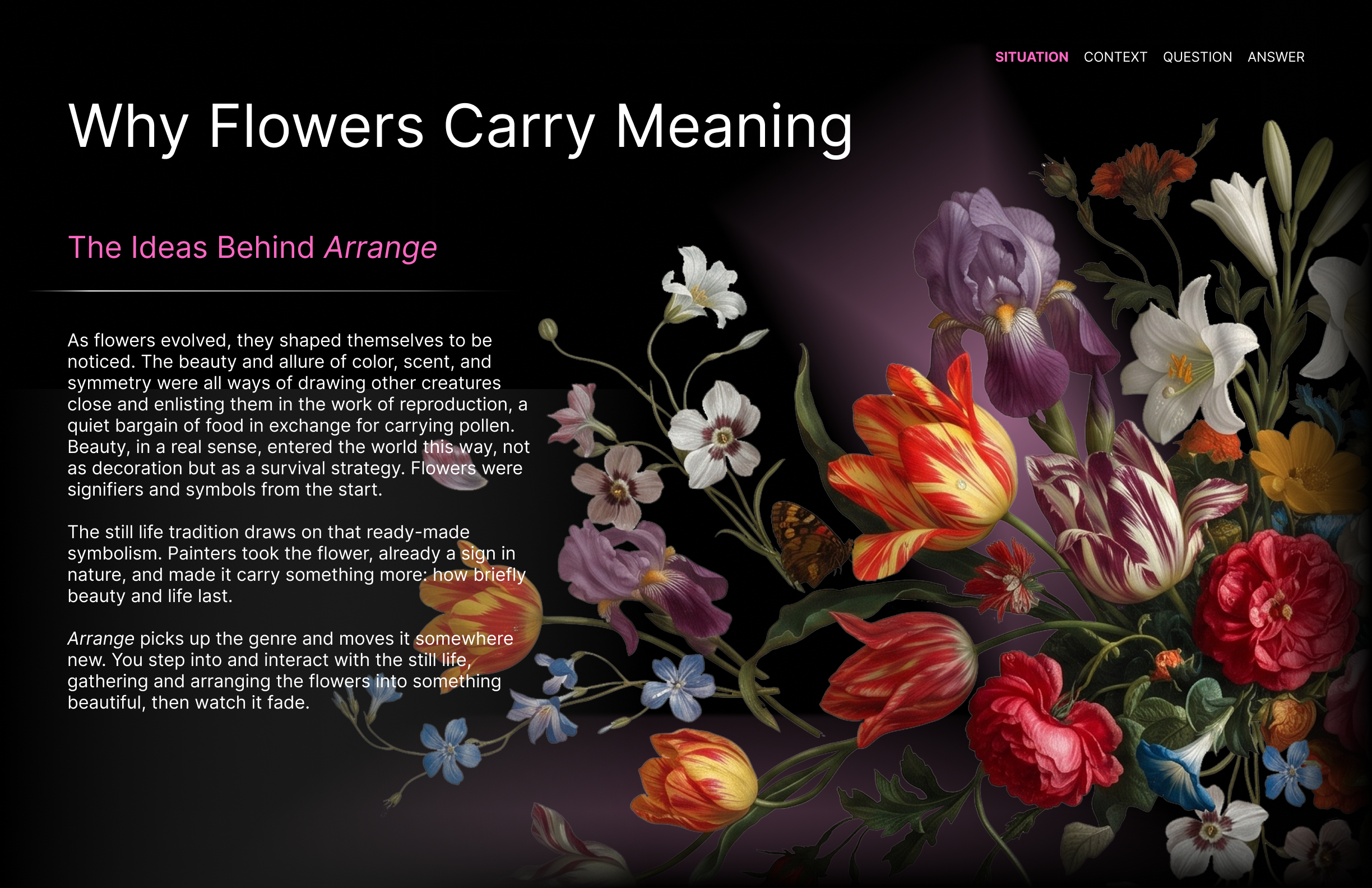
As flowers evolved, they shaped themselves to be noticed. The beauty and allure of color, scent, and symmetry were all ways of drawing other creatures close and enlisting them in the work of reproduction, a quiet bargain of food in exchange for carrying pollen. Beauty, in a real sense, entered the world this way, not as decoration but as a survival strategy. Flowers were signifiers and symbols from the start.
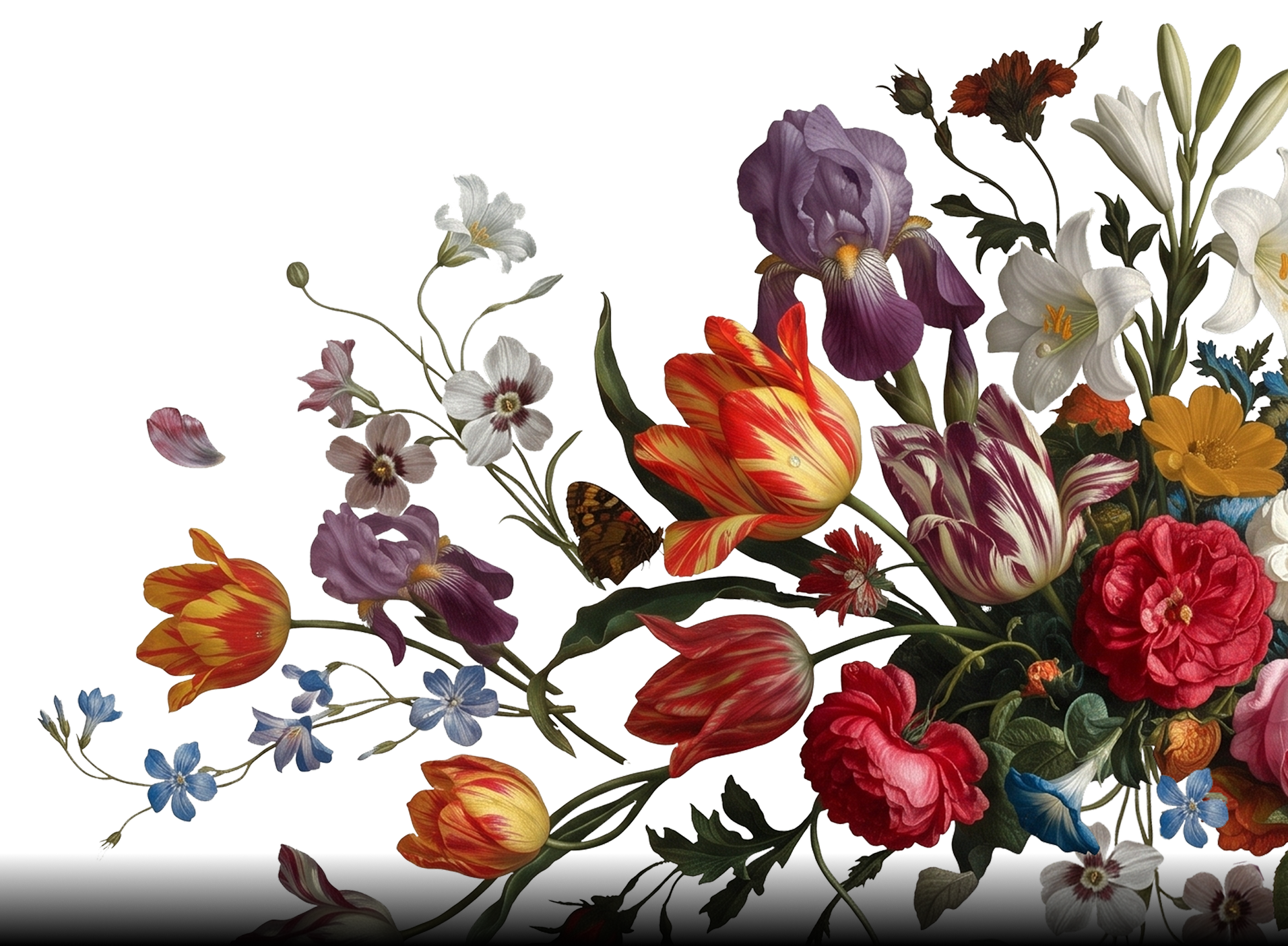
The still life tradition draws on that ready-made symbolism. Painters took the flower, already a sign in nature, and made it carry something more: how briefly beauty and life last.
Arrange picks up the genre and moves it somewhere new. You step into and interact with the still life, gathering and arranging the flowers into something beautiful, then watch it fade.
Creative Research
Inspiration
This project grew out of my interest in still life paintings, plants, and the potential of how immersive XR experiences can transform the experience of art.
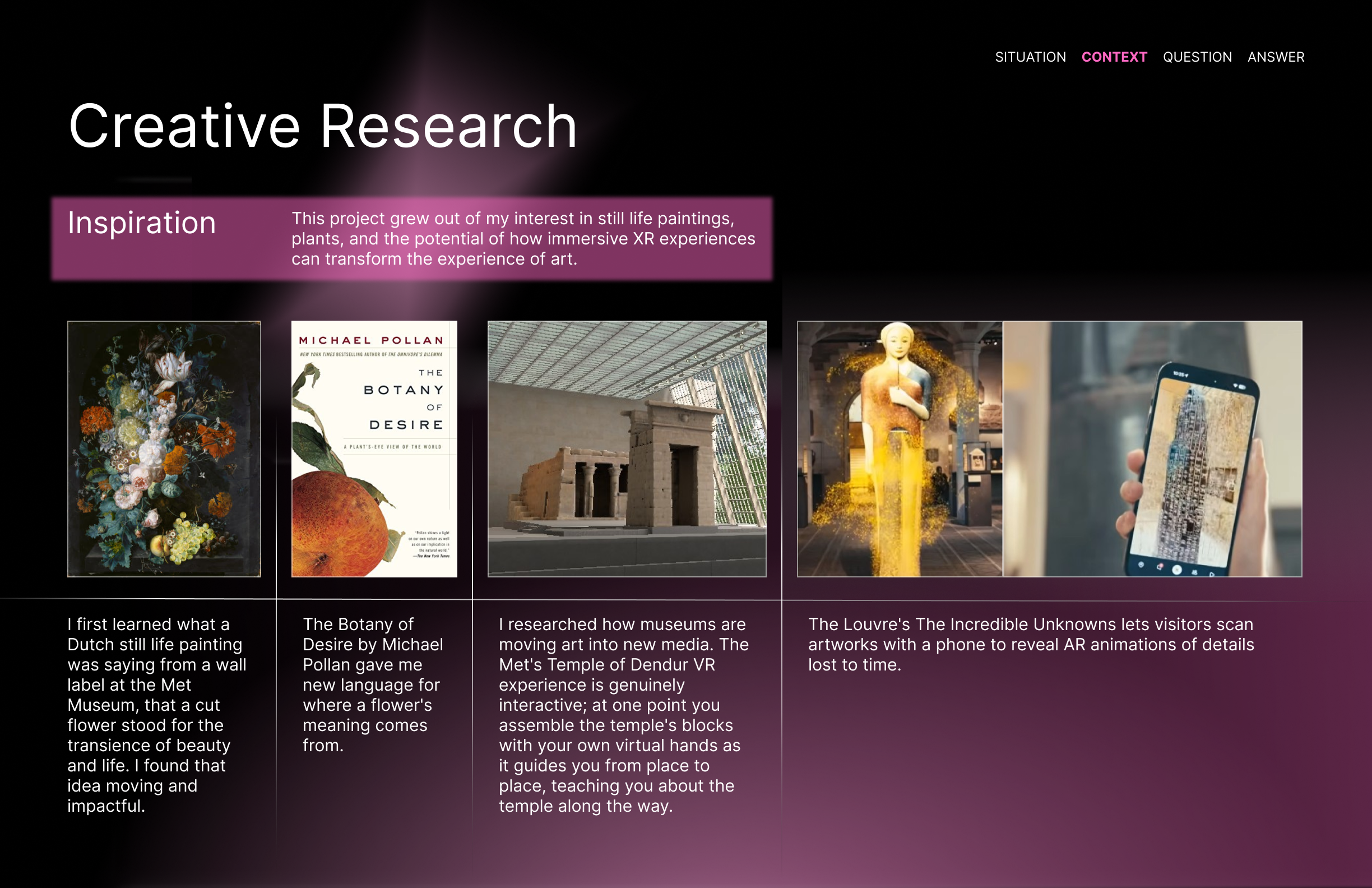
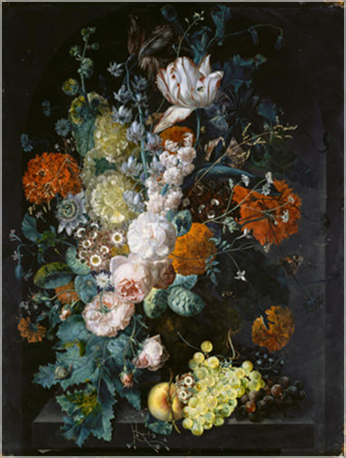
I first learned what a Dutch still life painting was saying from a wall label at the Met Museum, that a cut flower stood for the transience of beauty and life. I found that idea moving and impactful.
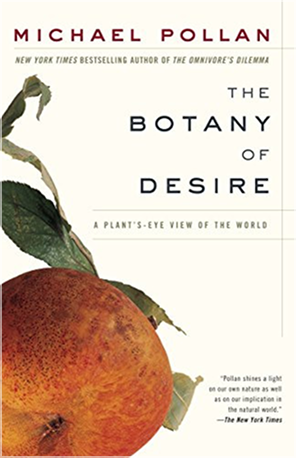
The Botany of Desire by Michael Pollan gave me new language for where a flower's meaning comes from.
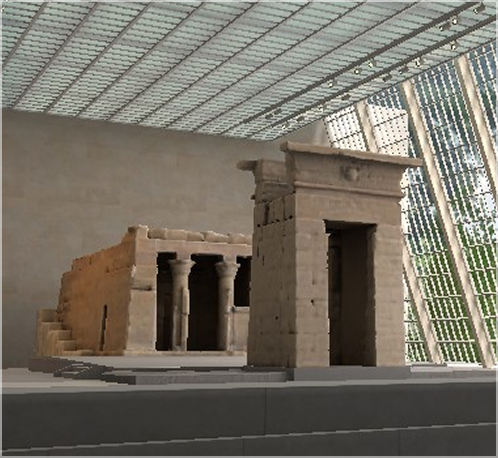
I researched how museums are moving art into new media. The Met's Temple of Dendur VR experience is genuinely interactive; at one point you assemble the temple's blocks with your own virtual hands as it guides you from place to place, teaching you about the temple along the way.
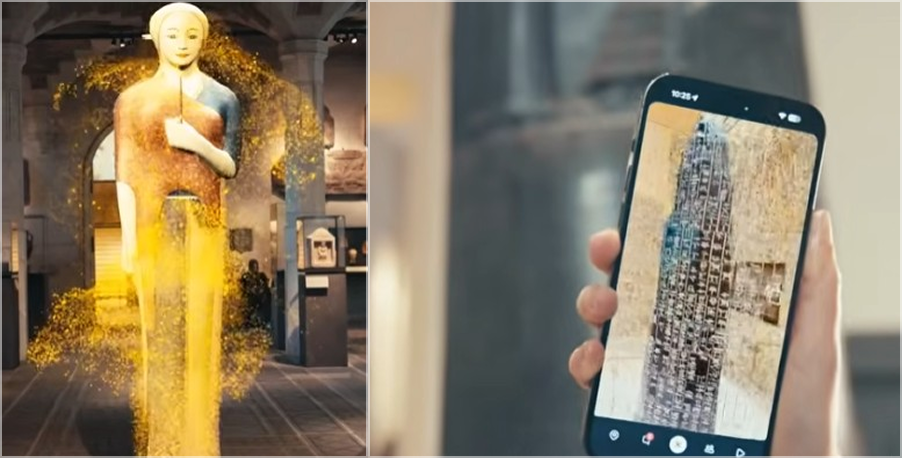
The Louvre's The Incredible Unknowns lets visitors scan artworks with a phone to reveal AR animations of details lost to time.
Immersive Research
Immersive, But Passive
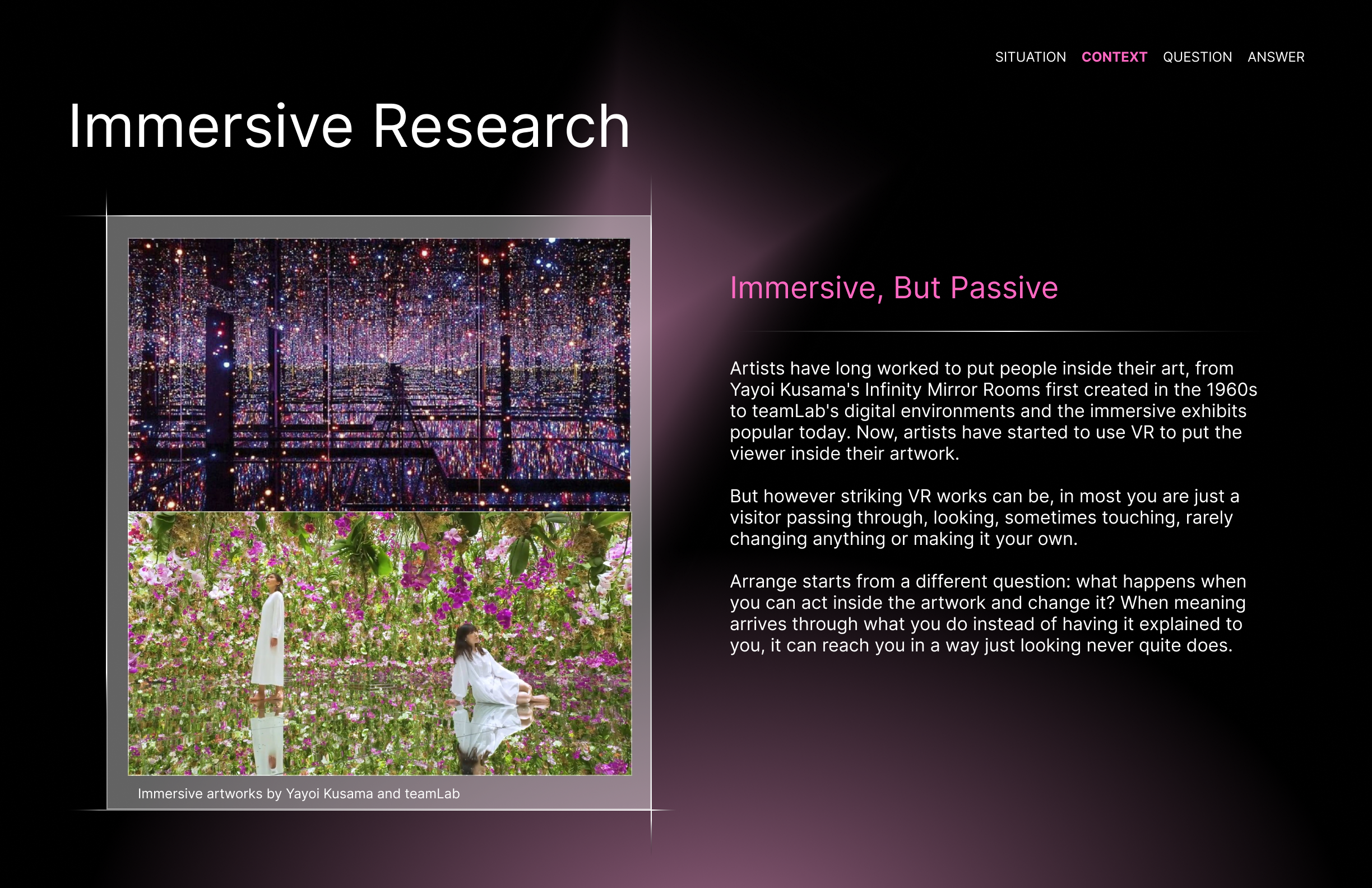
Artists have long worked to put people inside their art, from Yayoi Kusama's Infinity Mirror Rooms first created in the 1960s to teamLab's digital environments and the immersive exhibits popular today. Now, artists have started to use VR to put the viewer inside their artwork.
But however striking VR works can be, in most you are just a visitor passing through, looking, sometimes touching, rarely changing anything or making it your own.
Arrange starts from a different question: what happens when you can act inside the artwork and change it? When meaning arrives through what you do instead of having it explained to you, it can reach you in a way just looking never quite does.
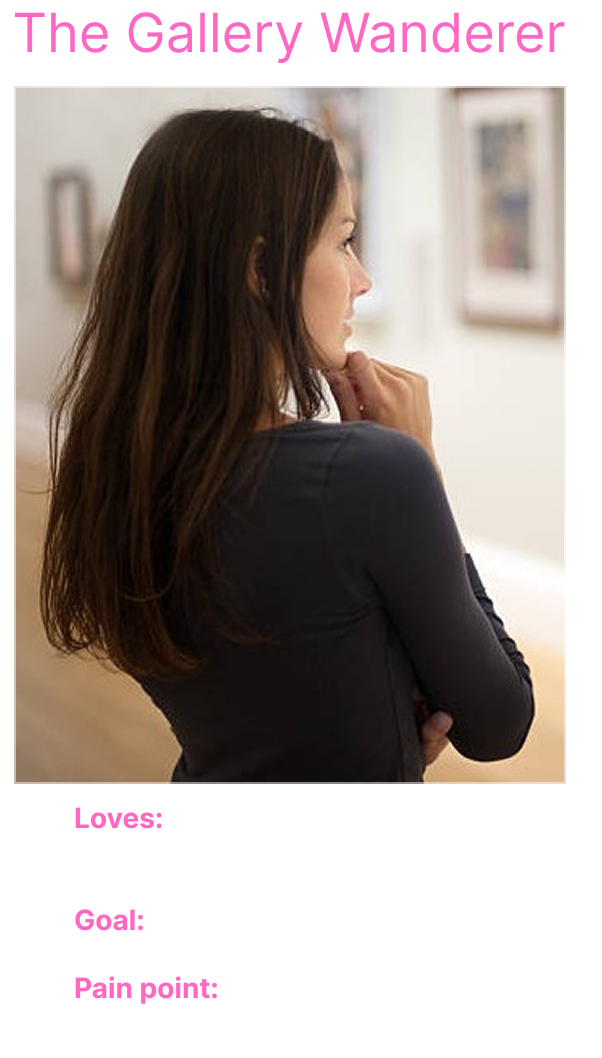
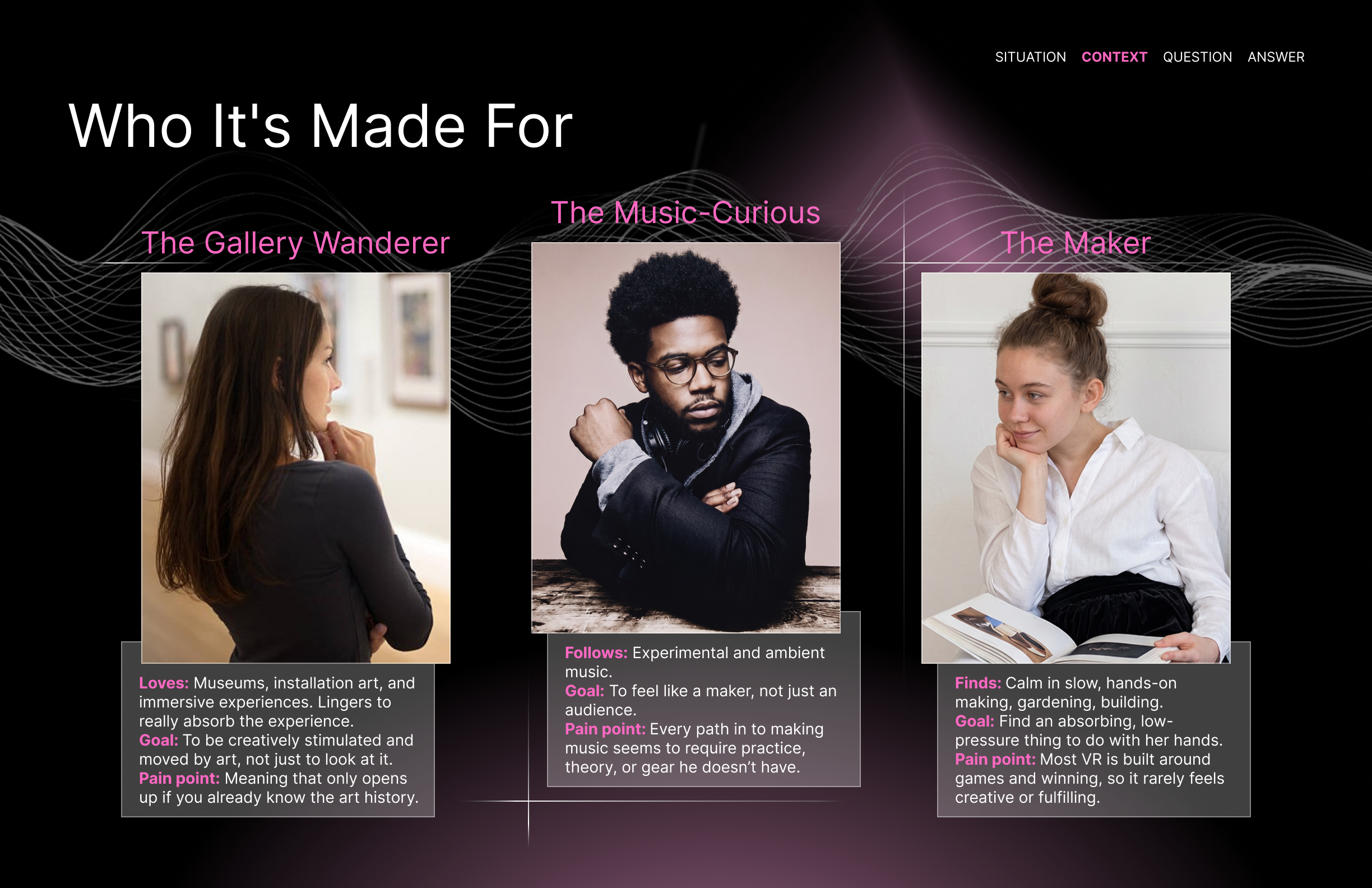
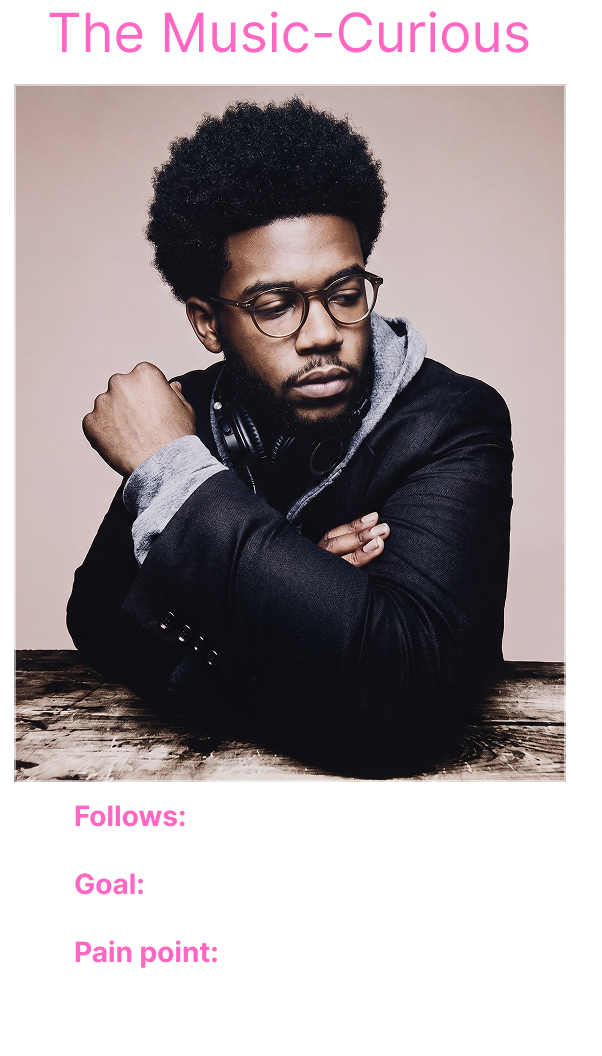
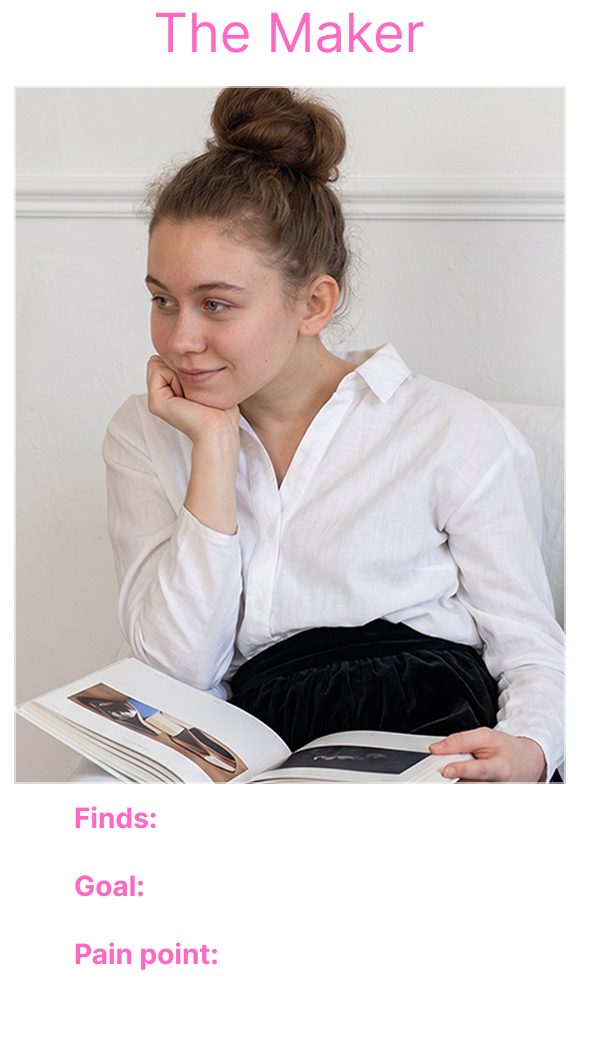
Who It’s Made For
How Do You Make Someone Feel a Still Life?
Problem Statement
The feeling a still life painting was built to carry, how briefly beauty and life last, stays locked inside symbolism most people never learn to read, so viewers see something pretty and move on. The viewer misses a genuine encounter, a chance to feel a quiet truth about how brief and beautiful things are. And the work itself is diminished, reduced to decoration, its meaning intact but unread, doing none of what it was intended to do.
How Might We
How might we let a person feel what a still life means, without having to read its symbolism, in a medium (VR) where nothing decays?
A Still Life You Can Step Inside
The Core Experience
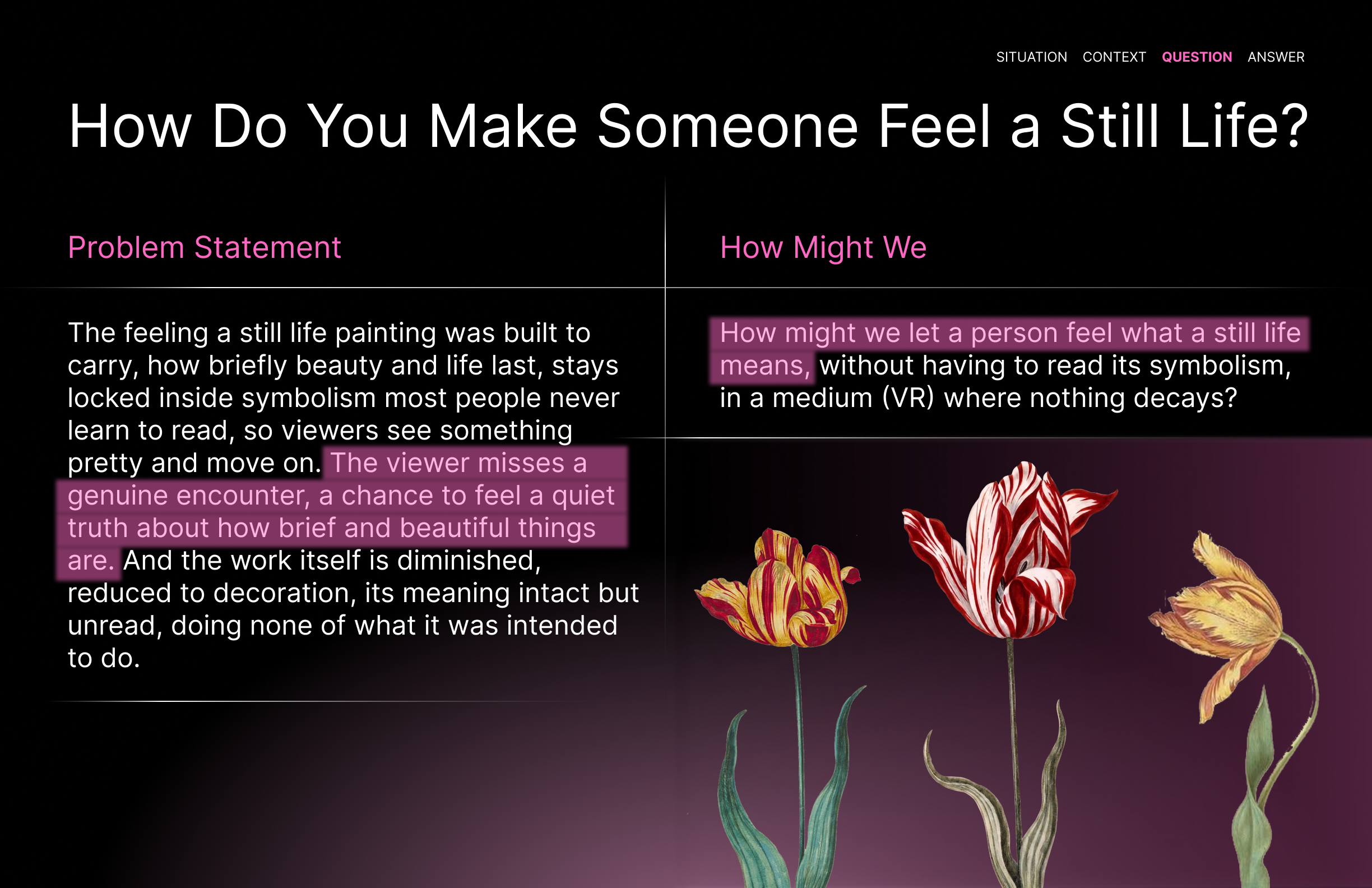
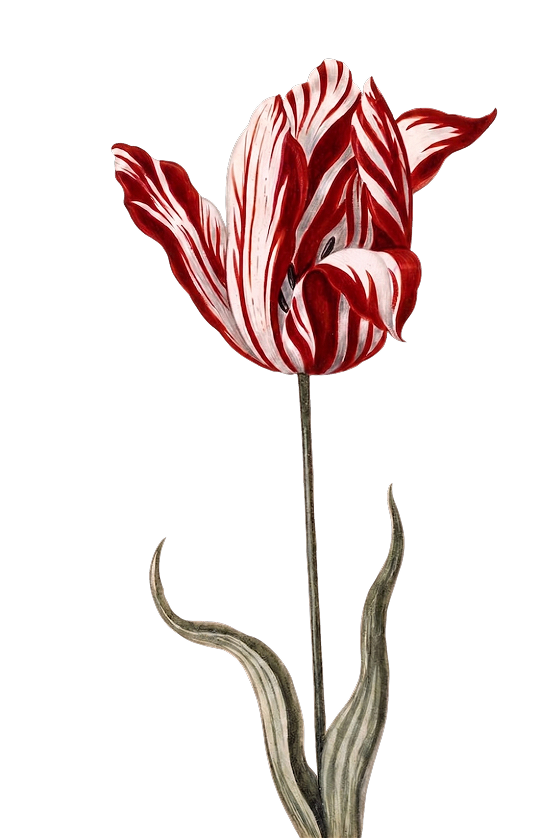
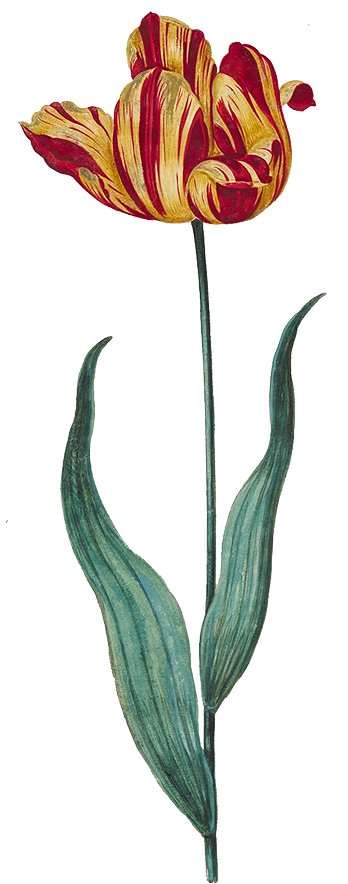
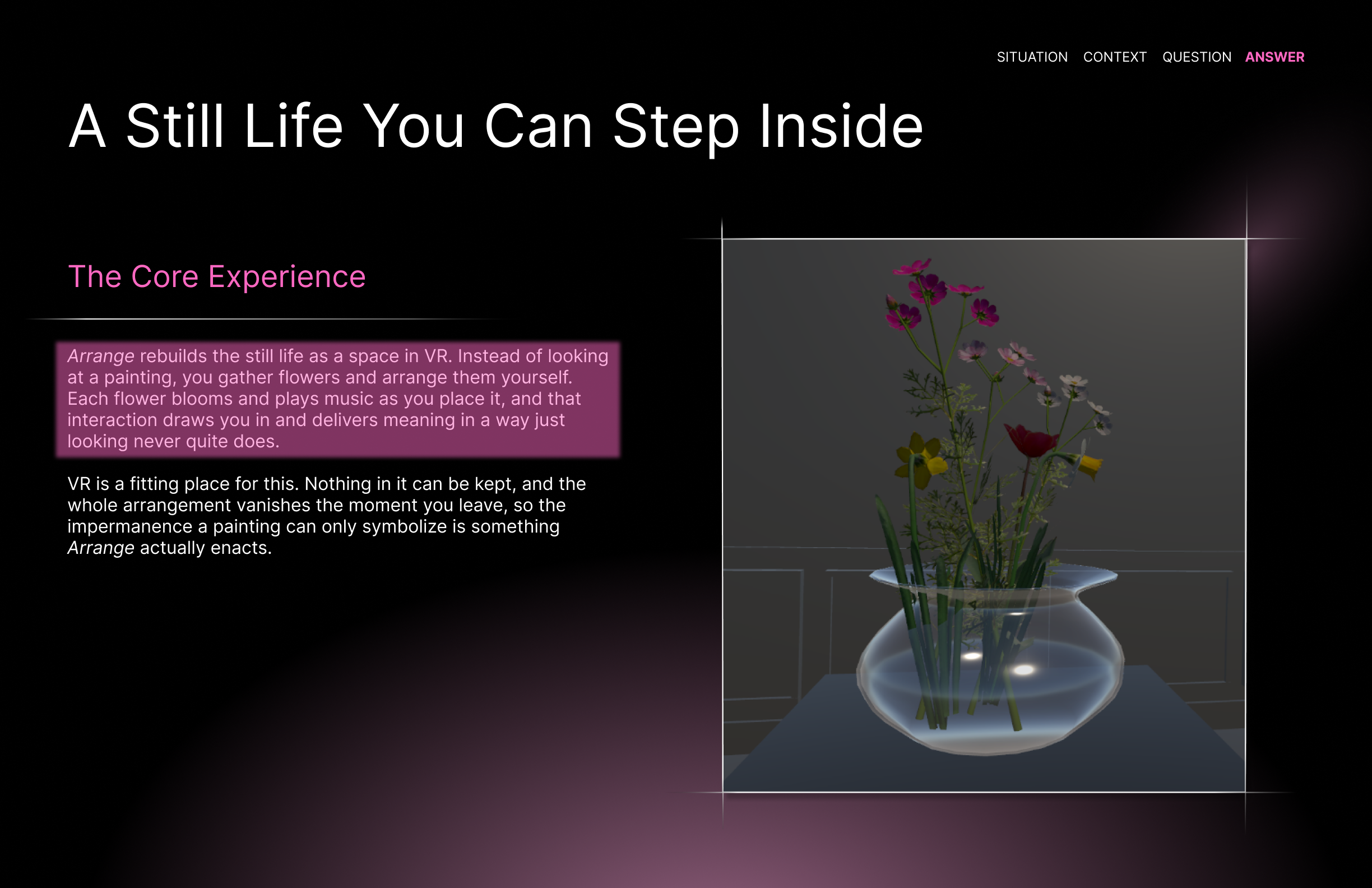
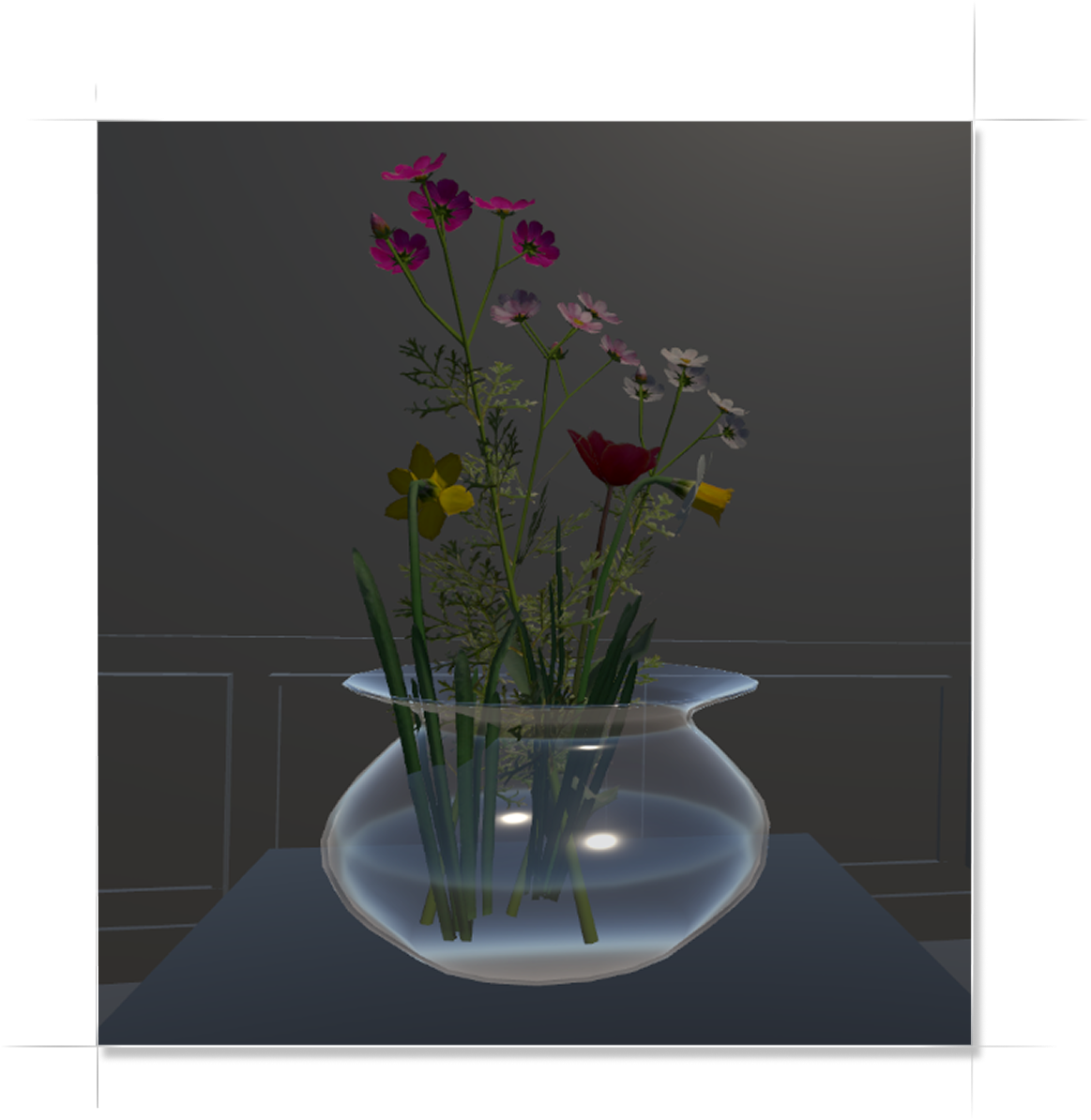
Arrange rebuilds the still life as a space in VR. Instead of looking at a painting, you gather flowers and arrange them yourself. Each flower blooms and plays music as you place it, and that interaction draws you in and delivers meaning in a way just looking never quite does.
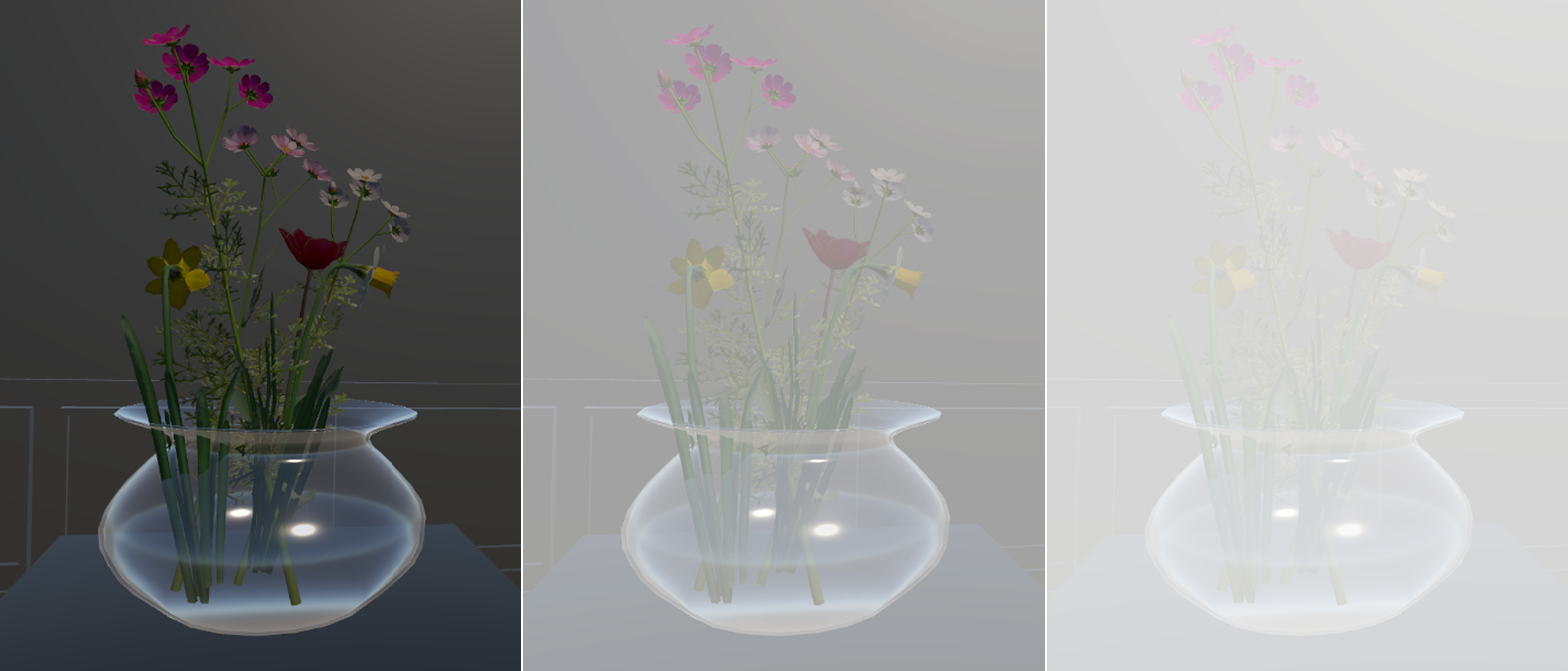
VR is a fitting place for this. Nothing in it can be kept, and the whole arrangement vanishes the moment you leave, so the impermanence a painting can only symbolize is something Arrange actually enacts.
Each Flower Is an Instrument
Adding Sounds to Flowers
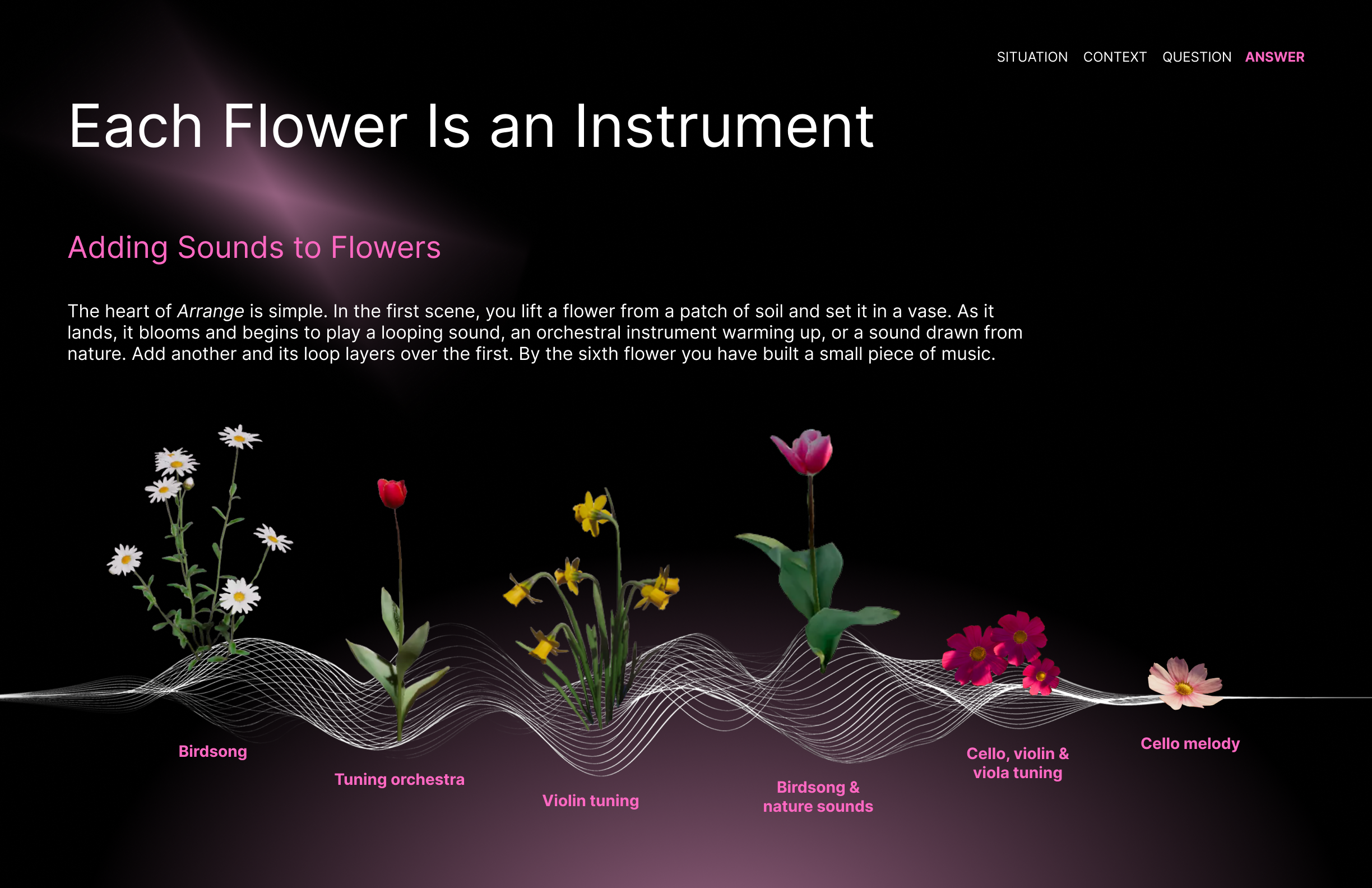
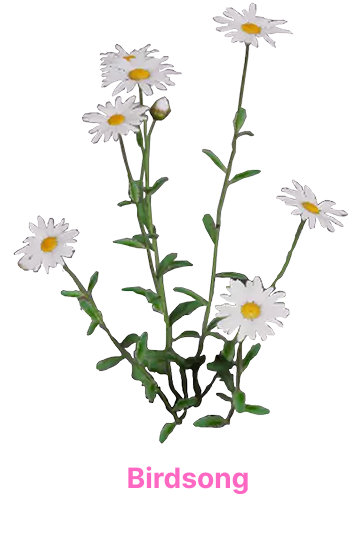
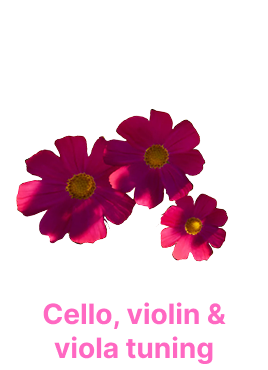
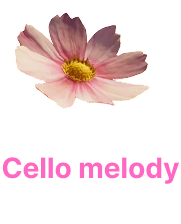
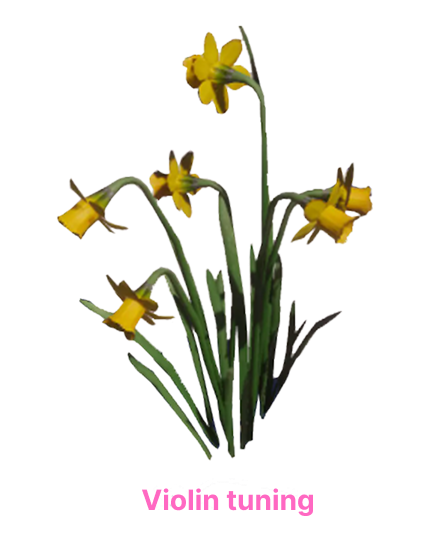
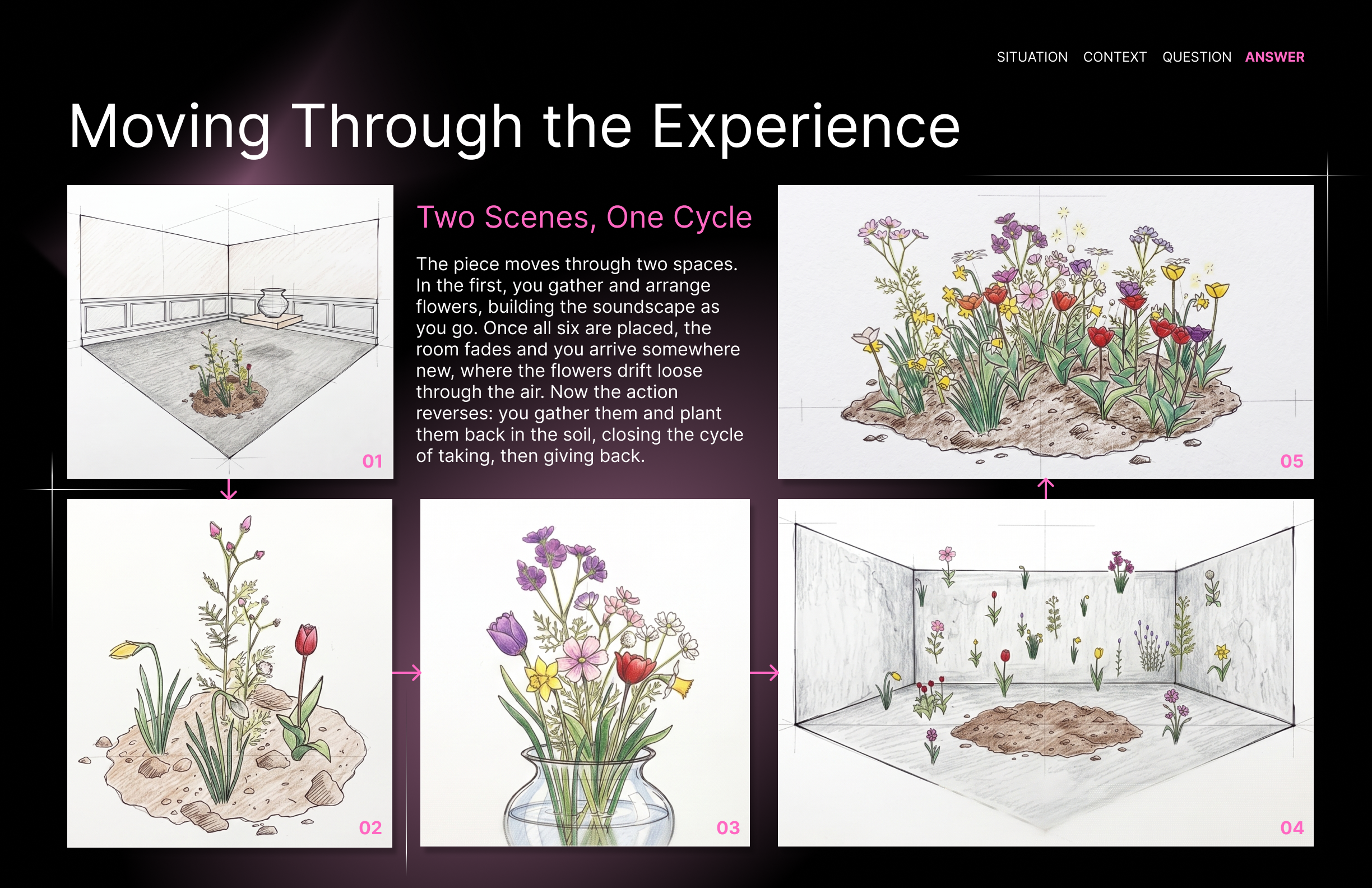
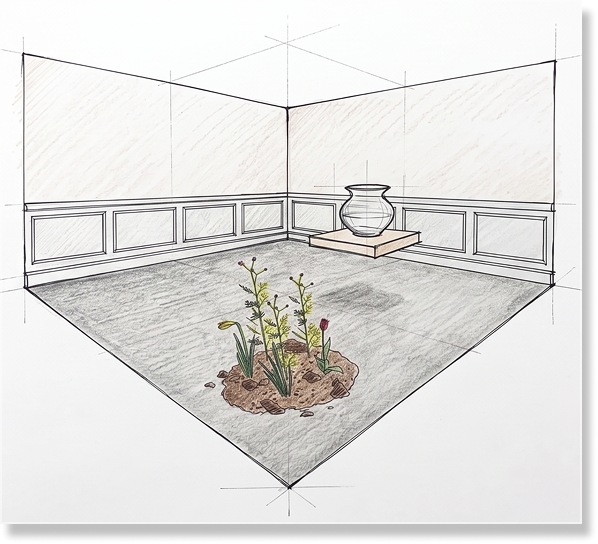
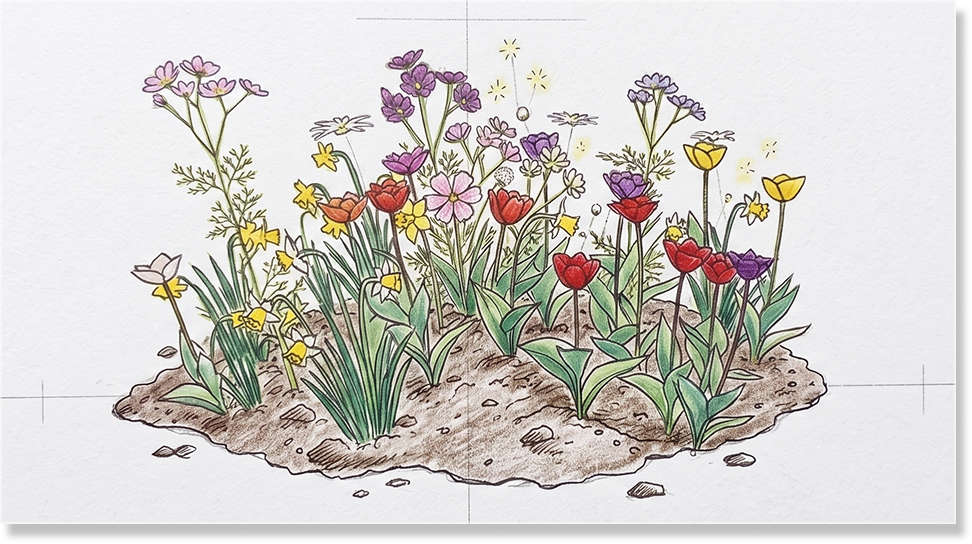
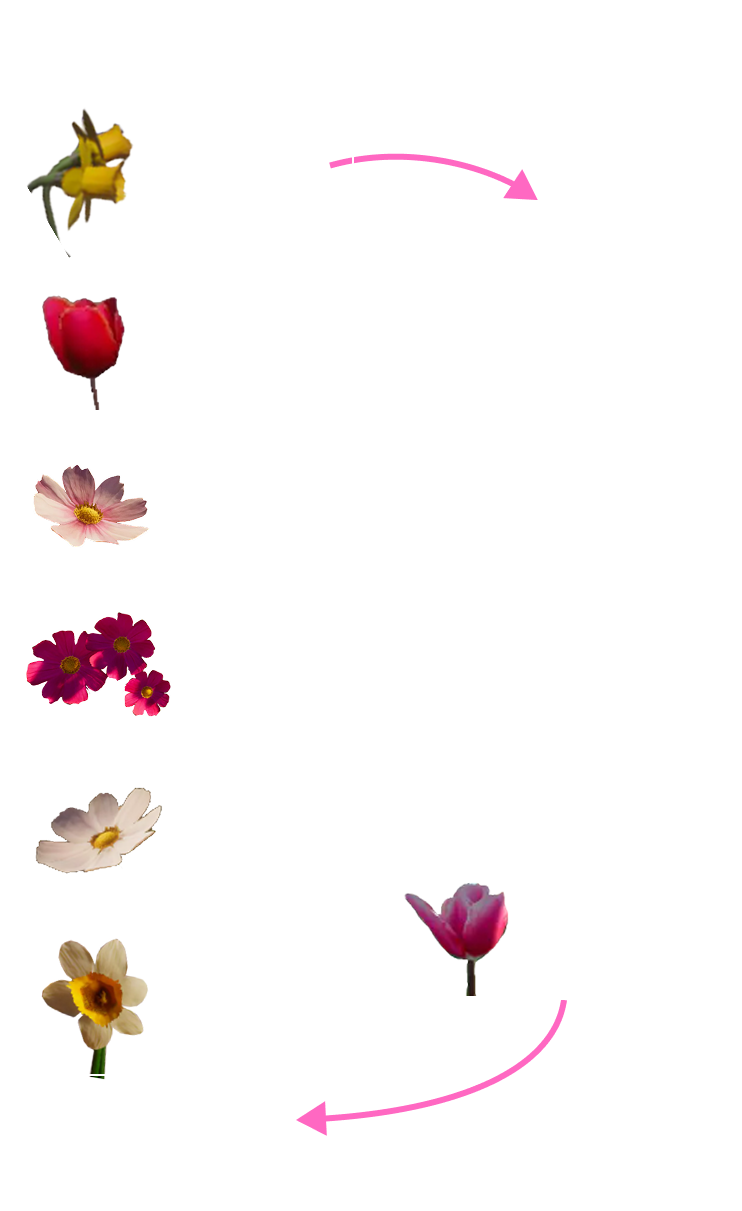
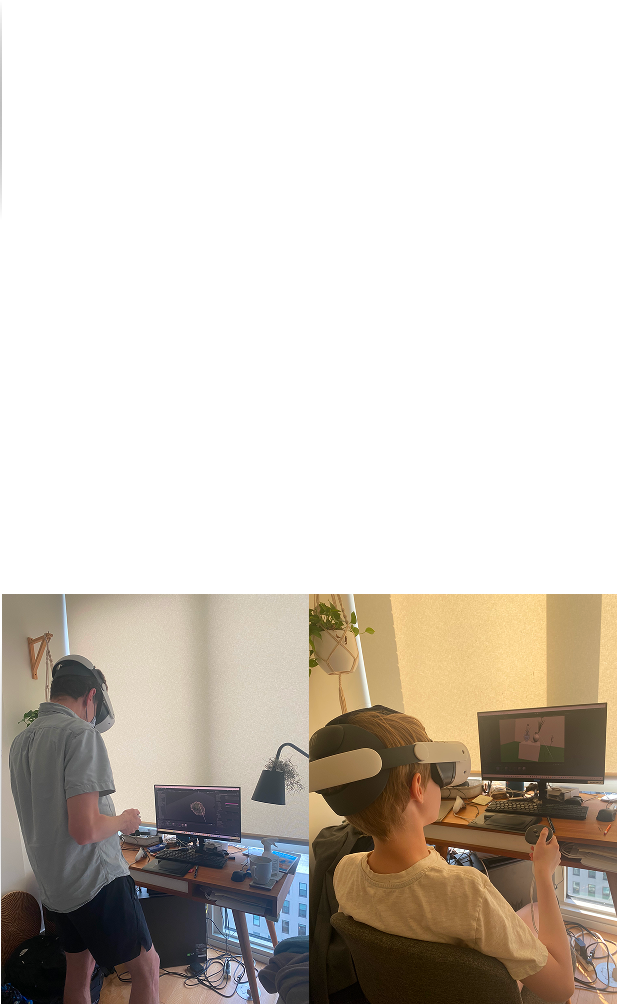
The heart of Arrange is simple. In the first scene, you lift a flower from a patch of soil and set it in a vase. As it lands, it blooms and begins to play a looping sound, an orchestral instrument warming up, or a sound drawn from nature. Add another and its loop layers over the first. By the sixth flower you have built a small piece of music.


Moving Through the Experience
Two Scenes, One Cycle
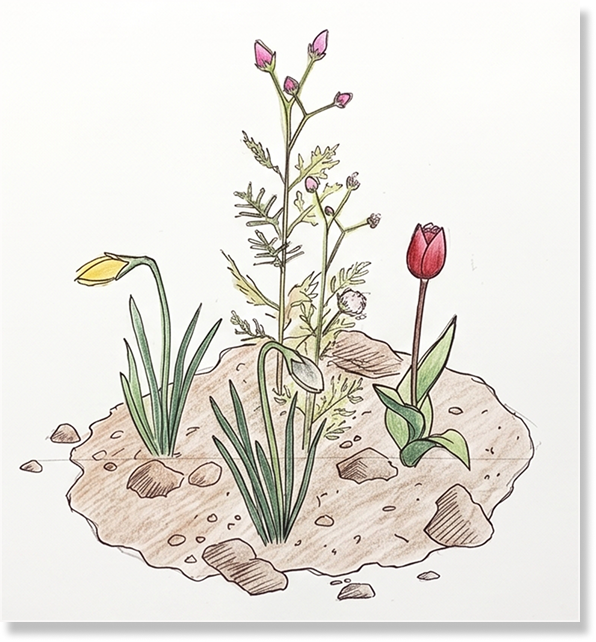
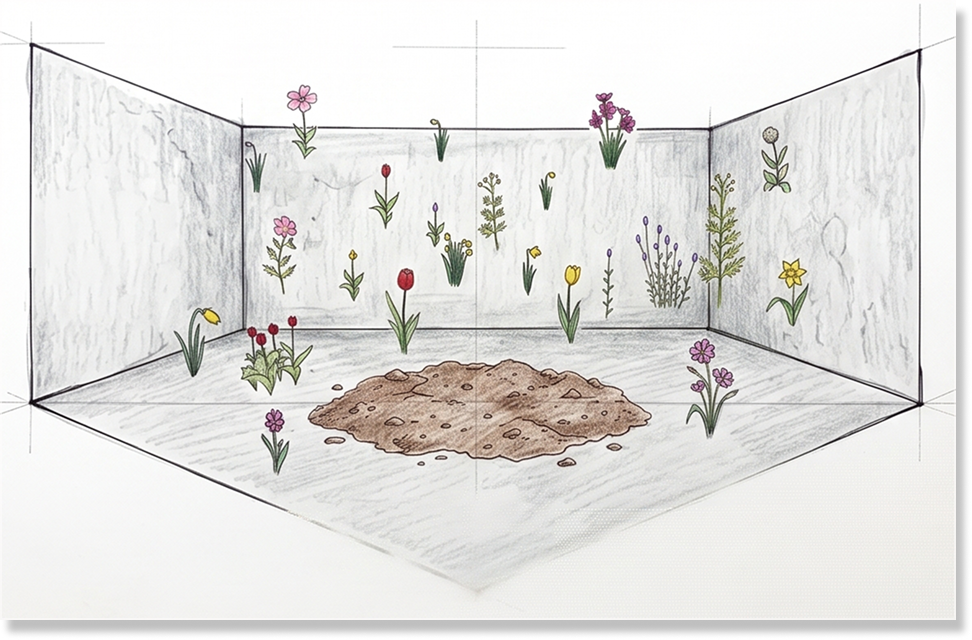
The piece moves through two spaces. In the first, you gather and arrange flowers, building the soundscape as you go. Once all six are placed, the room fades and you arrive somewhere new, where the flowers drift loose through the air. Now the action reverses: you gather them and plant them back in the soil, closing the cycle of taking, then giving back.
Proof of Concept
Testing the Core Mechanic First
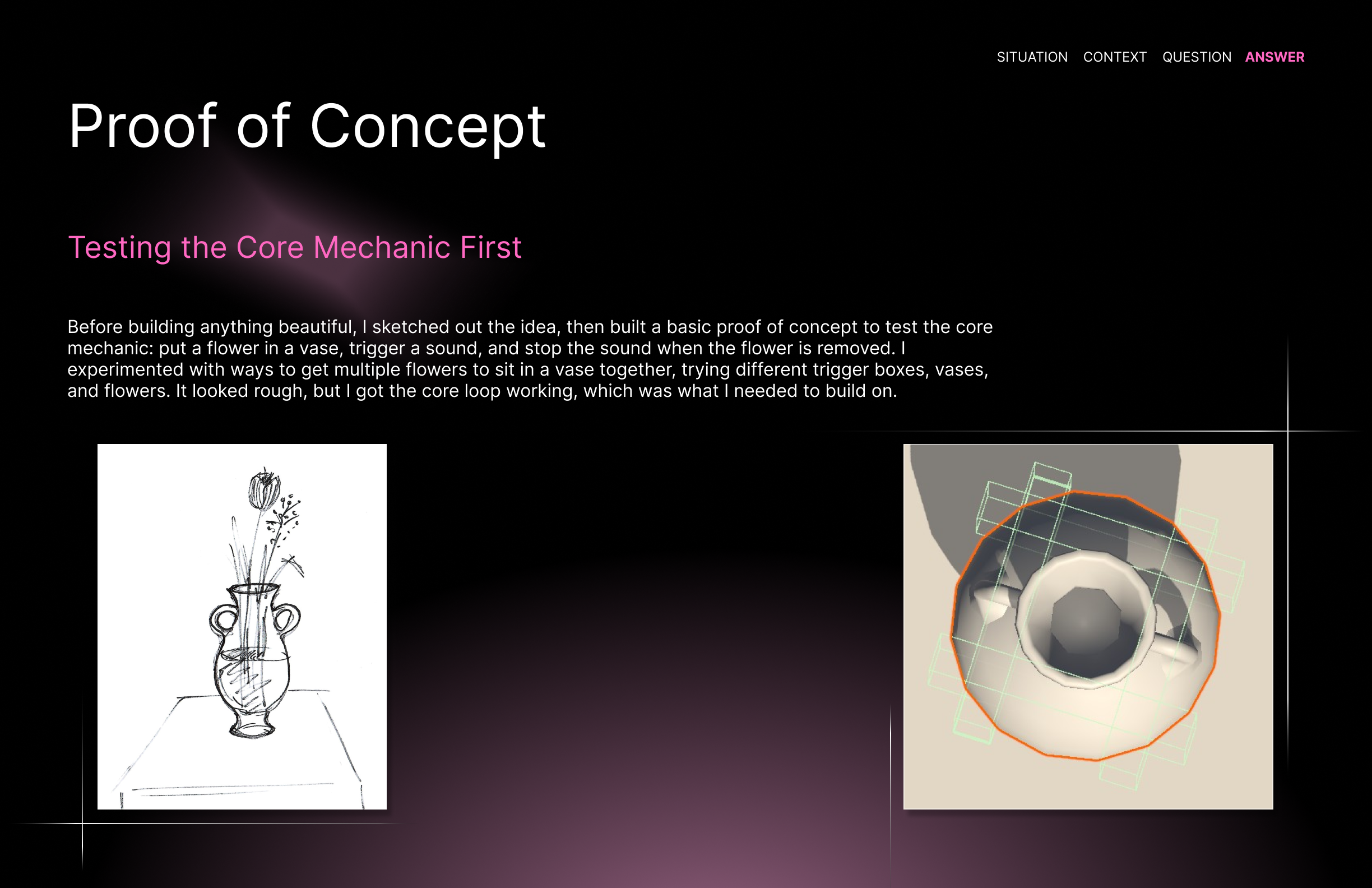
Before building anything beautiful, I sketched out the idea, then built a basic proof of concept to test the core mechanic: put a flower in a vase, trigger a sound, and stop the sound when the flower is removed. I experimented with ways to get multiple flowers to sit in a vase together, trying different trigger boxes, vases, and flowers. It looked rough, but I got the core loop working, which was what I needed to build on.
Learning From What Didn't Work
User Testing, Round One
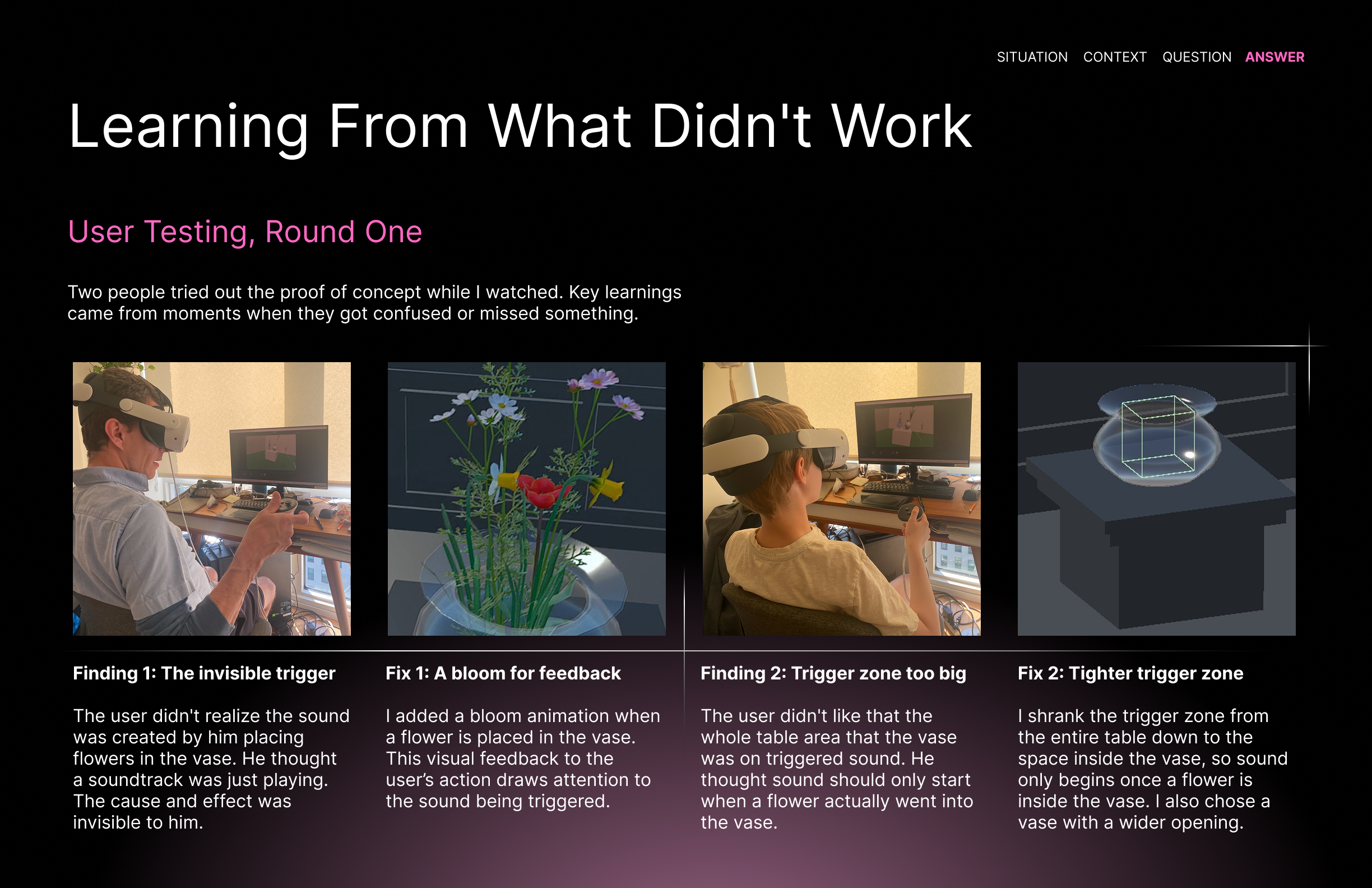
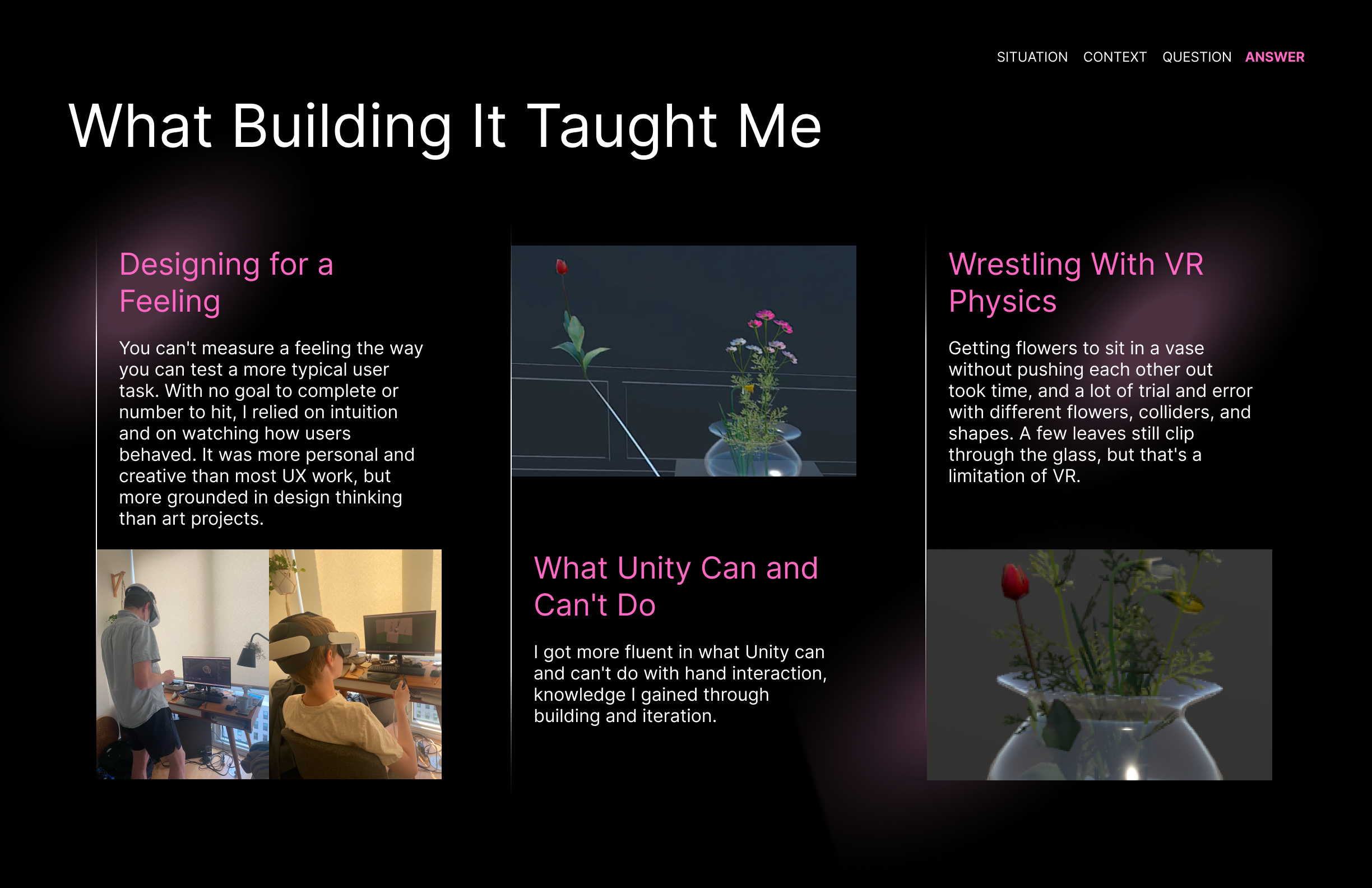
Two people tried out the proof of concept while I watched. Key learnings came from moments when they got confused or missed something.
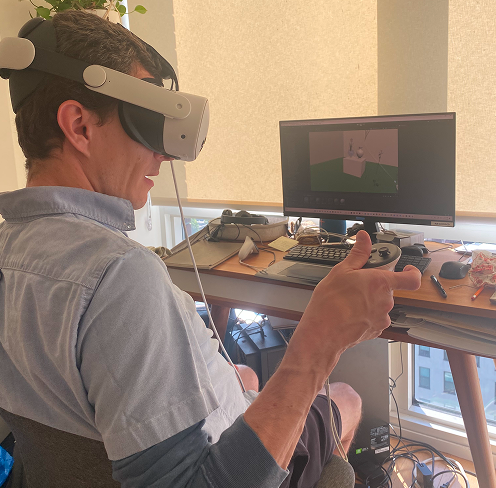
Finding 1: The invisible trigger
The user didn't realize the sound was created by him placing flowers in the vase. He thought a soundtrack was just playing. The cause and effect was invisible to him.
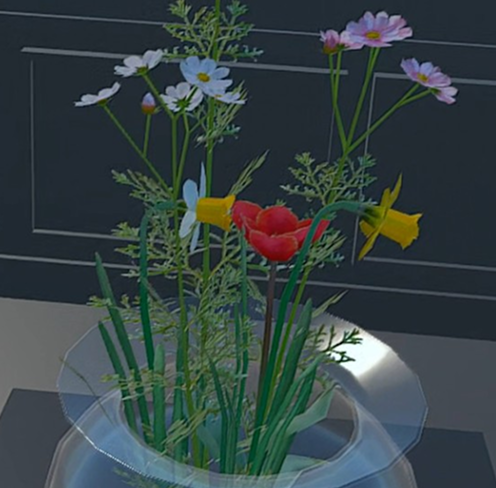
Fix 1: A bloom for feedback
I added a bloom animation when a flower is placed in the vase. This visual feedback to the user’s action draws attention to the sound being triggered.
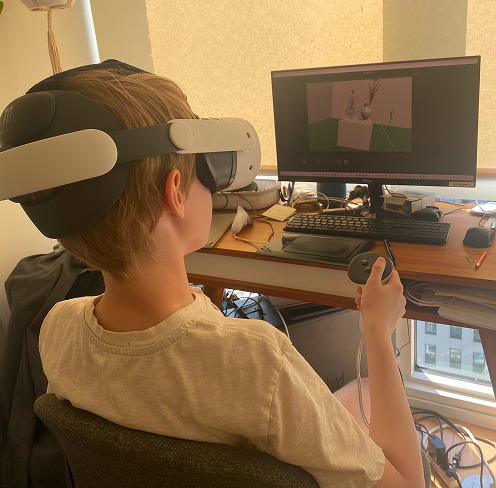
Finding 2: Trigger zone too big
The user didn't like that the whole table area that the vase was on triggered sound. He thought sound should only start when a flower actually went into the vase.
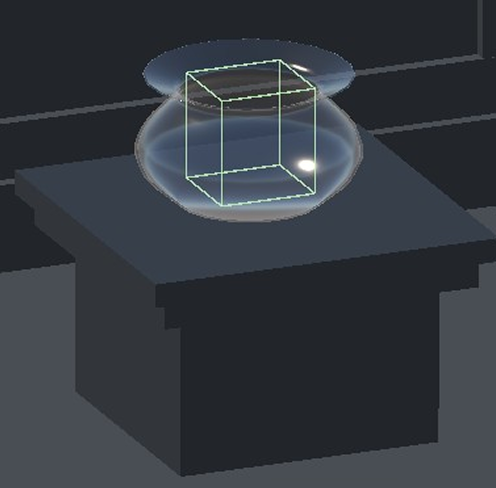
Fix 2: Tighter trigger zone
I shrank the trigger zone from the entire table down to the space inside the vase, so sound only begins once a flower is inside the vase. I also chose a vase with a wider opening.
Building a Room That Felt Like a Still Life
Scene One
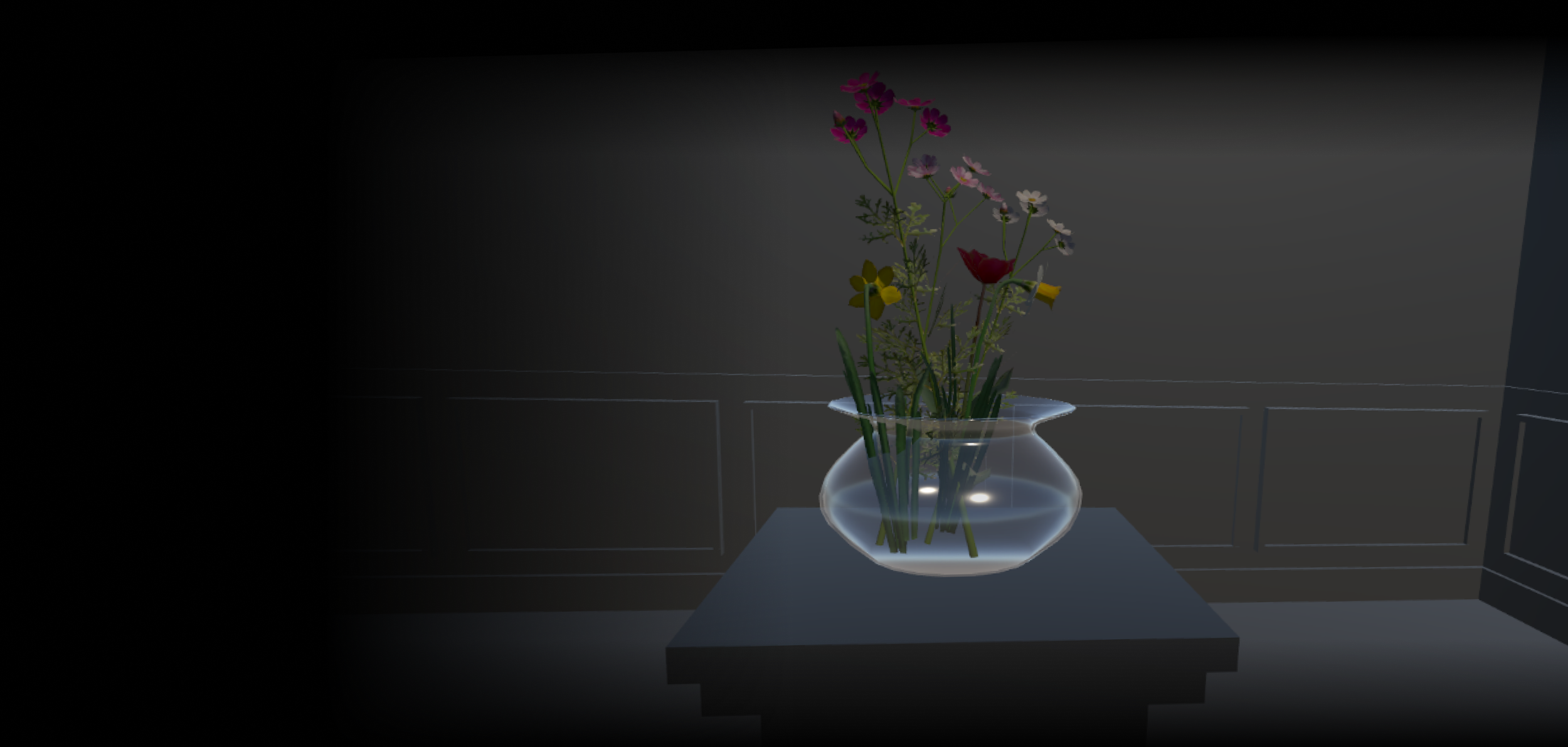
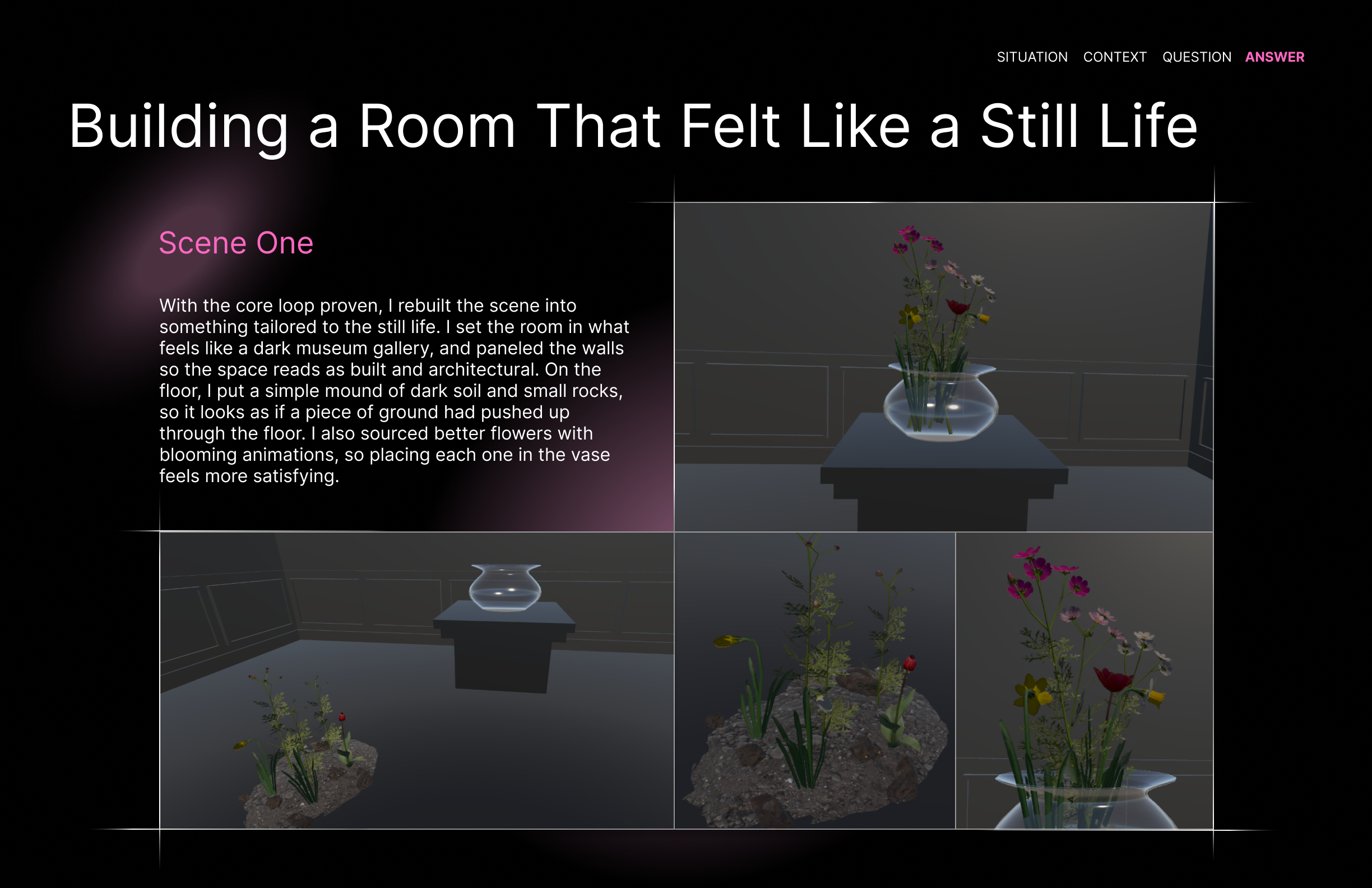
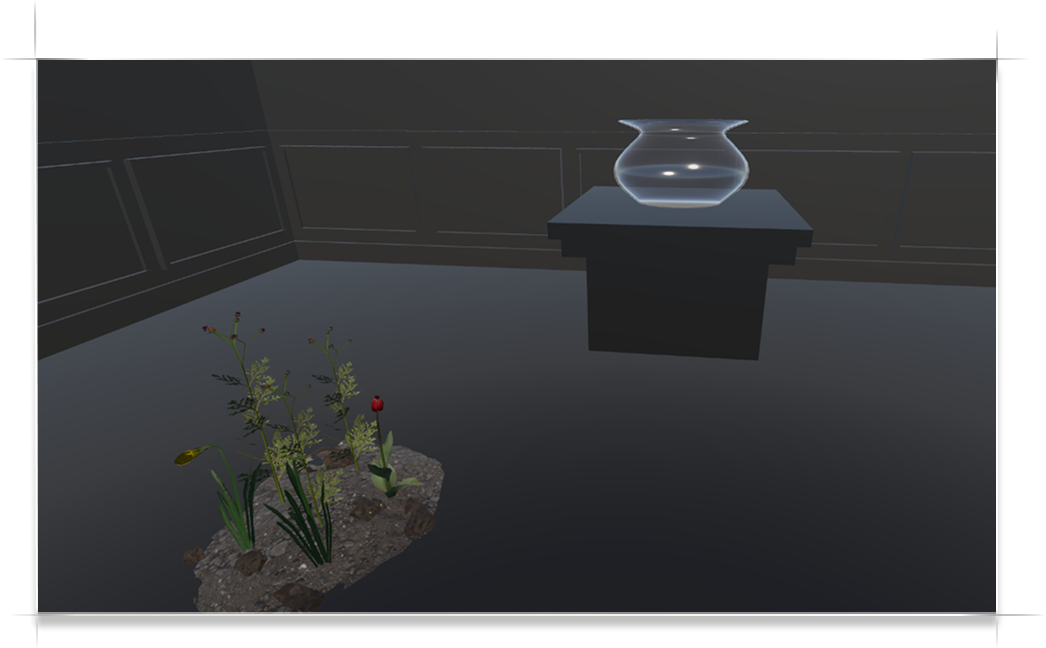
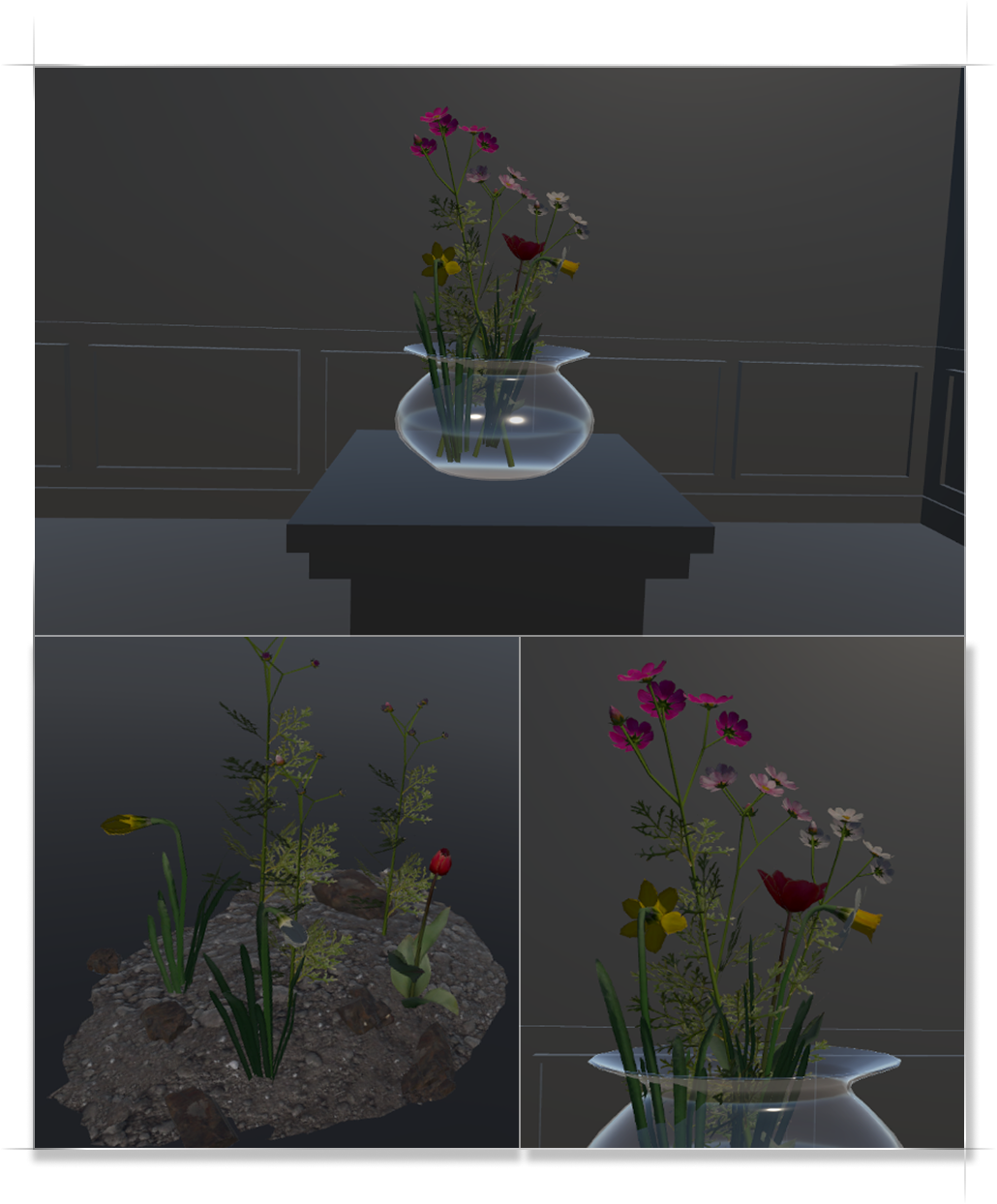
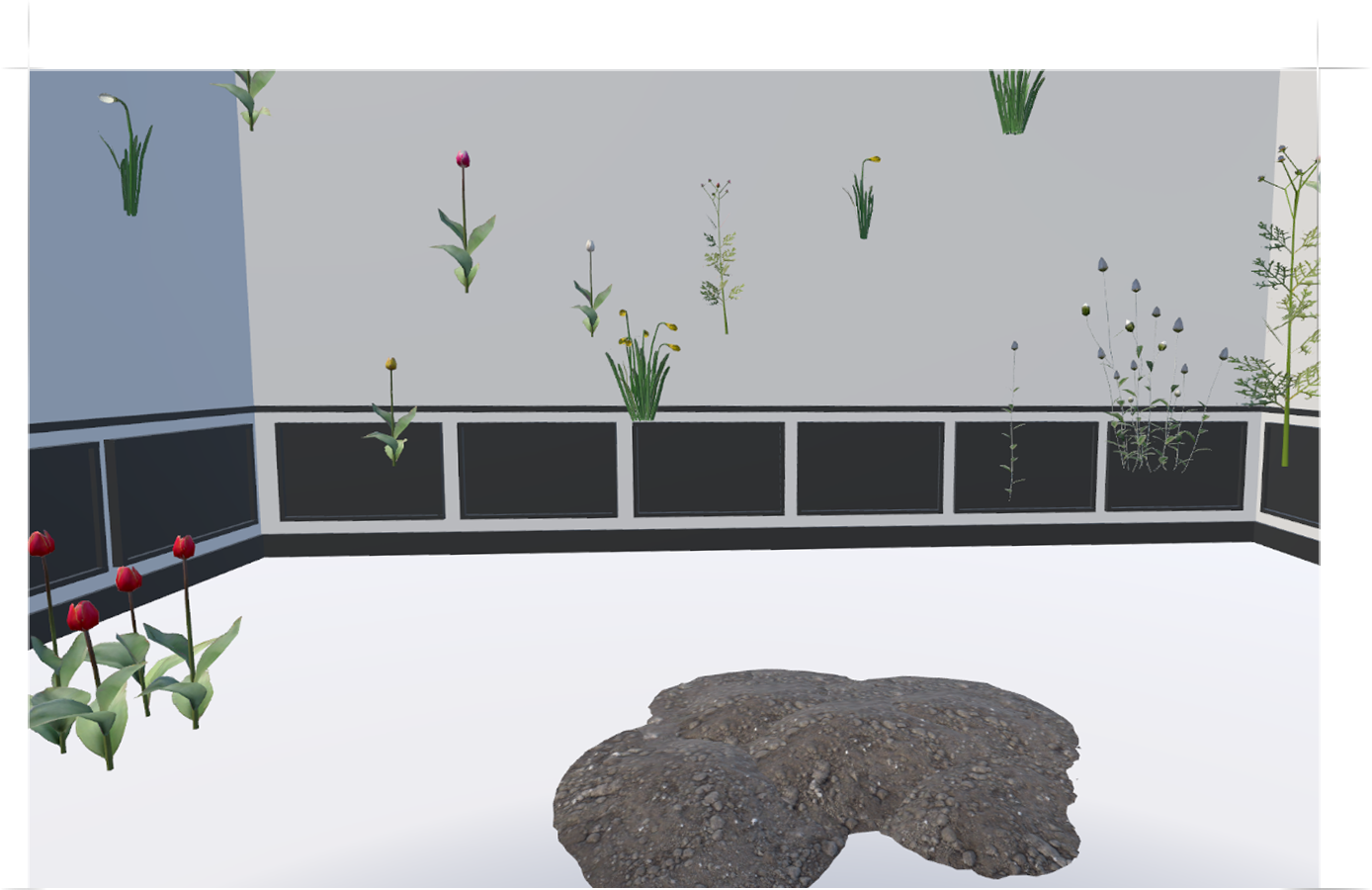
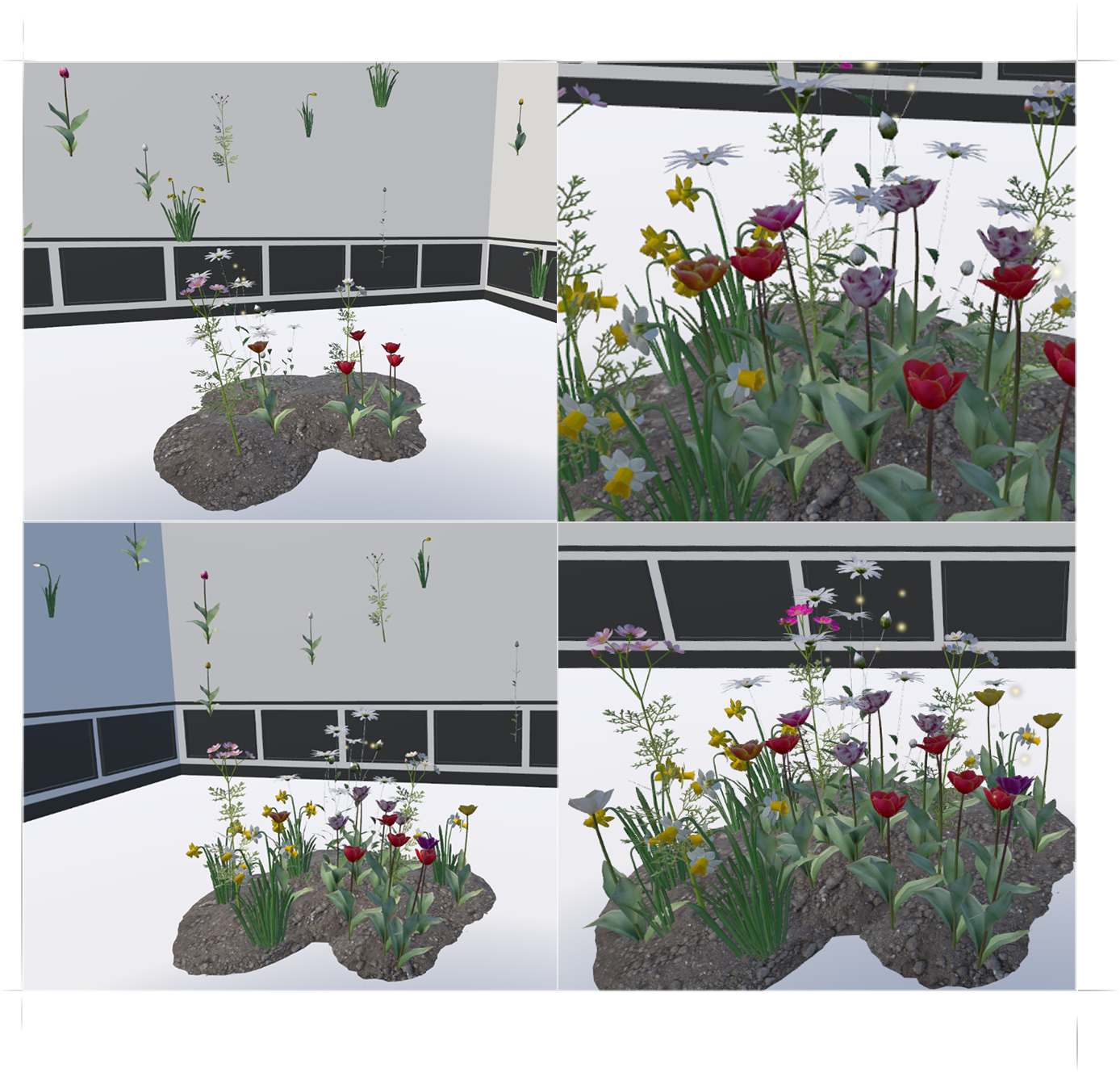
With the core loop proven, I rebuilt the scene into something tailored to the still life. I set the room in what feels like a dark museum gallery, and paneled the walls so the space reads as built and architectural. On the floor, I put a simple mound of dark soil and small rocks, so it looks as if a piece of ground had pushed up through the floor. I also sourced better flowers with blooming animations, so placing each one in the vase feels more satisfying.
Building an Ending
Scene Two
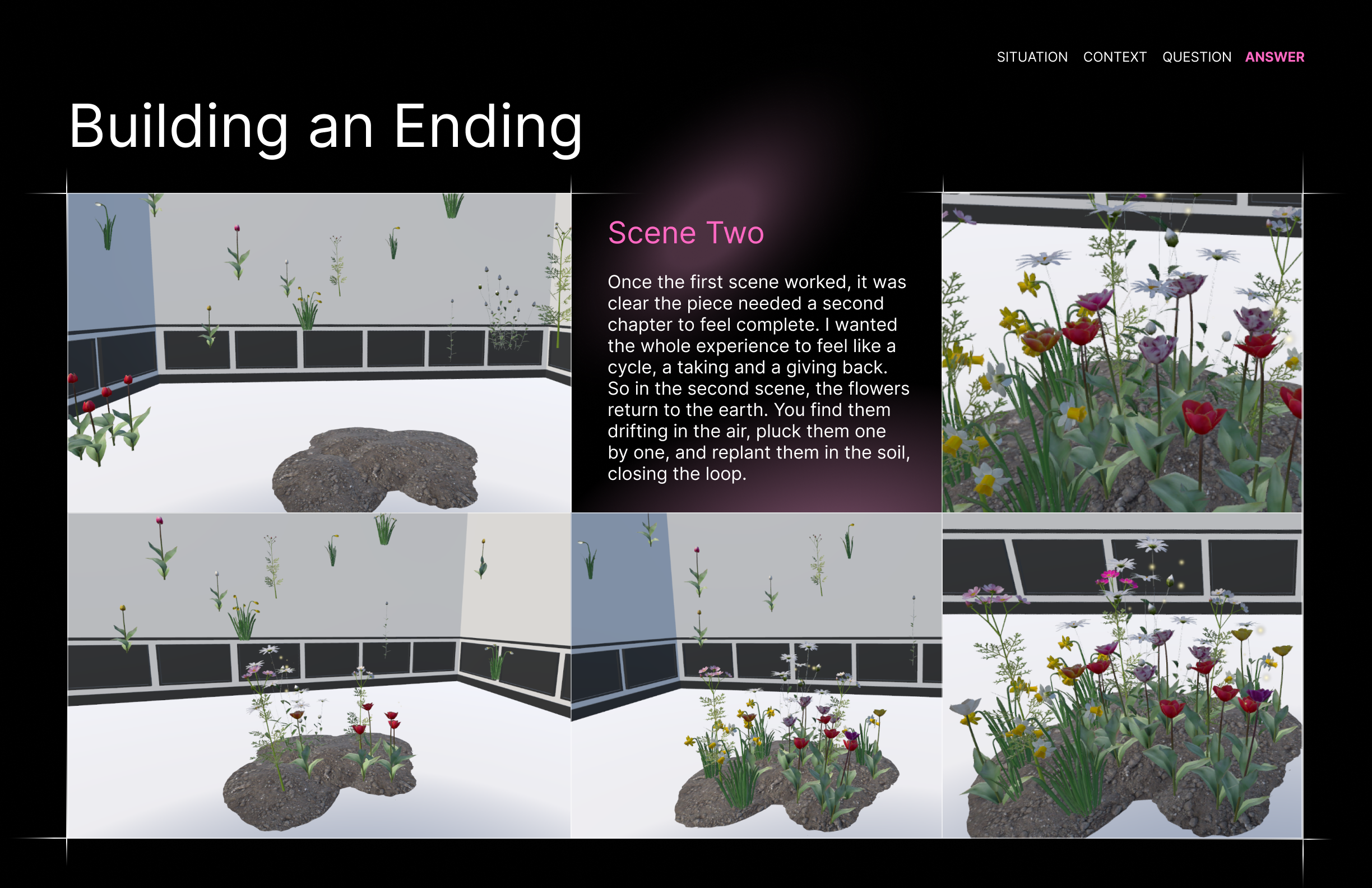
Once the first scene worked, it was clear the piece needed a second chapter to feel complete. I wanted the whole experience to feel like a cycle, a taking and a giving back. So in the second scene, the flowers return to the earth. You find them drifting in the air, pluck them one by one, and replant them in the soil, closing the loop.
The Systems Underneath
Coding the Interaction
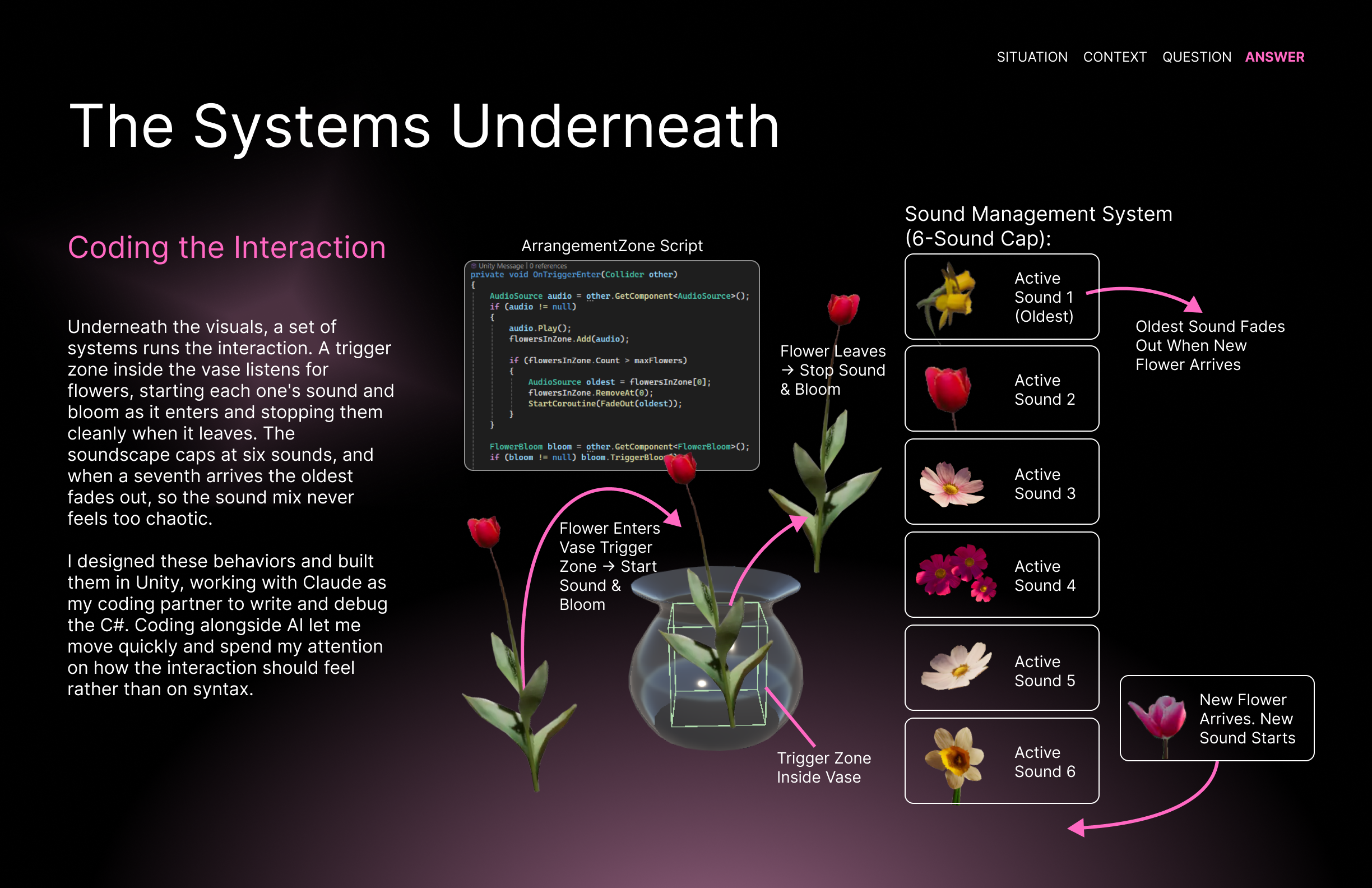
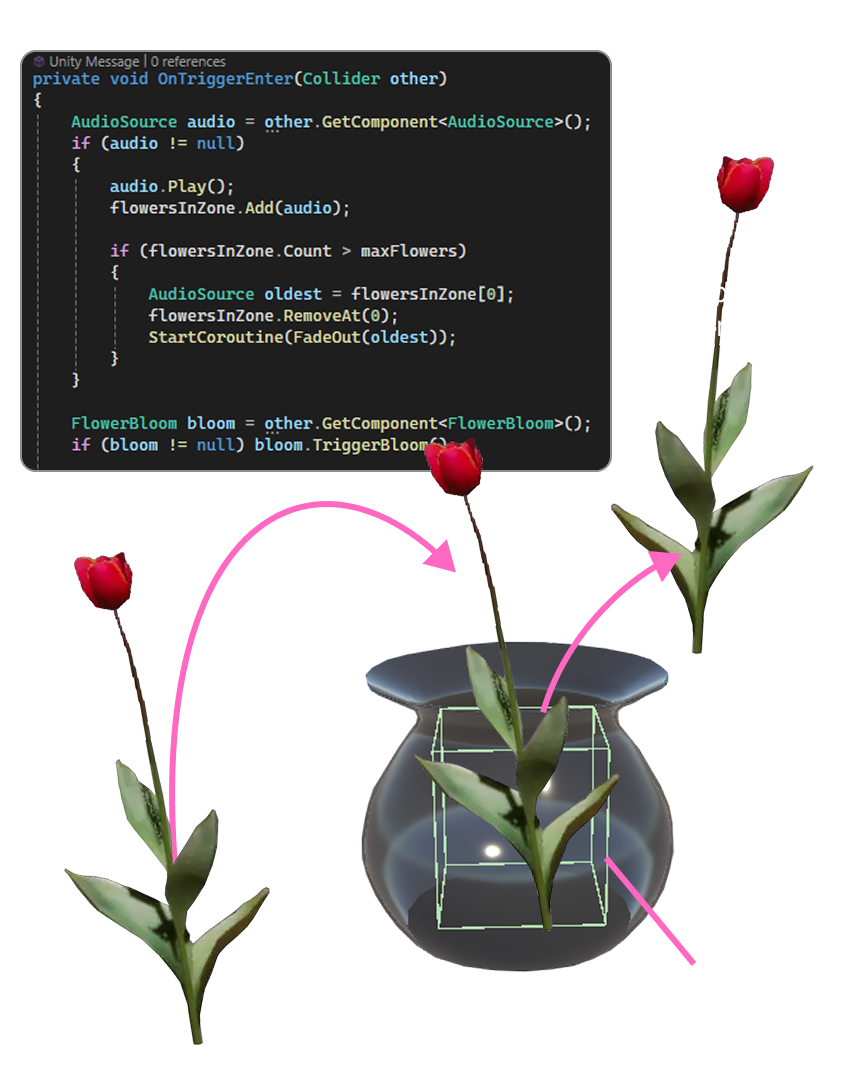
Underneath the visuals, a set of systems runs the interaction. A trigger zone inside the vase listens for flowers, starting each one's sound and bloom as it enters and stopping them cleanly when it leaves. The soundscape caps at six sounds, and when a seventh arrives the oldest fades out, so the sound mix never feels too chaotic.
I designed these behaviors and built them in Unity, working with Claude as my coding partner to write and debug the C#. Coding alongside AI let me move quickly and spend my attention on how the interaction should feel rather than on syntax.
Seeing, Hearing, and Making a Still Life
Final Prototype
The finished piece is a working two scene experience for Meta Quest. In the first scene, you arrange six flowers into a vase to compose a soundscape, while watching each one bloom. You then move to a second scene to return the flowers to the soil.
Please turn on the sound when you watch the video.
Making Impermanence Felt
The Core Design Challenge
The challenge running under the whole project was drawing out the themes a still life evokes, the fading of beauty and the transience of life. Those ideas aren't something every viewer arrives already aware of, and they're easy to miss. Making a person feel them, rather than telling them, was the hard part to build. It's also hard to test for. There's no clean task to complete or KPI to measure, so knowing whether the feeling actually lands is difficult to validate.
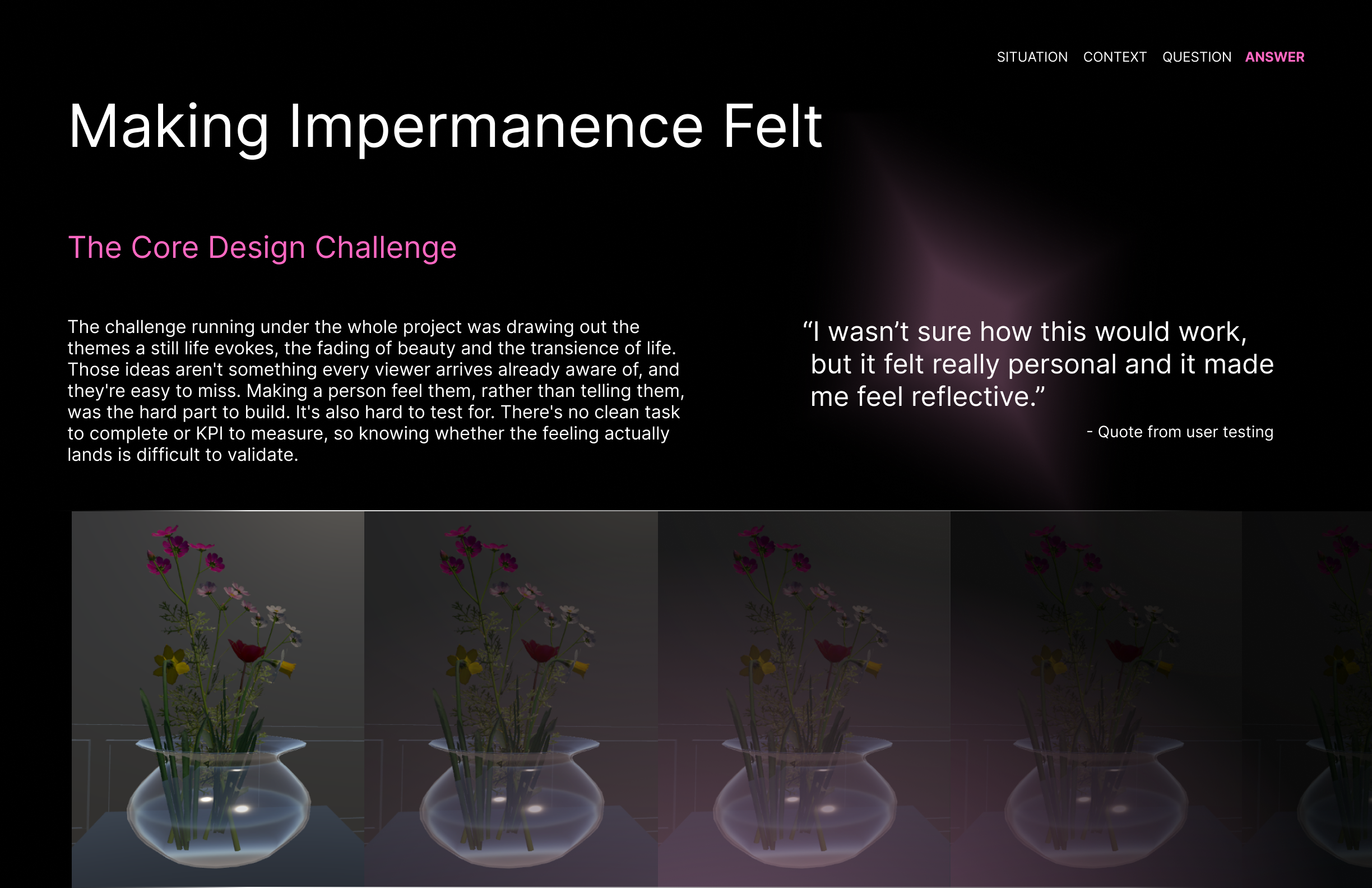
“I wasn’t sure how this would work,
but it felt really personal and it made
me feel reflective.”
- Quote from user testing
What Building It Taught Me
Designing for a Feeling
You can't measure a feeling the way you can test a more typical user task. With no goal to complete or number to hit, I relied on intuition and on watching how users behaved. It was more personal and creative than most UX work, but more grounded in design thinking than art projects.
What Unity Can and Can't Do
I got more fluent in what Unity can and can't do with hand interaction, knowledge I gained through building and iteration.
Wrestling With VR Physics
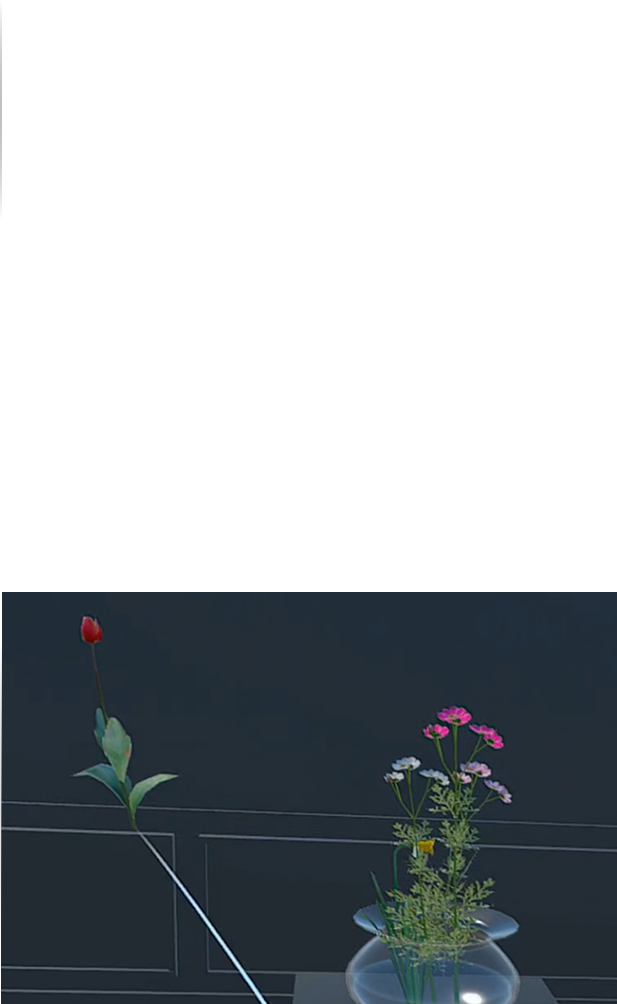
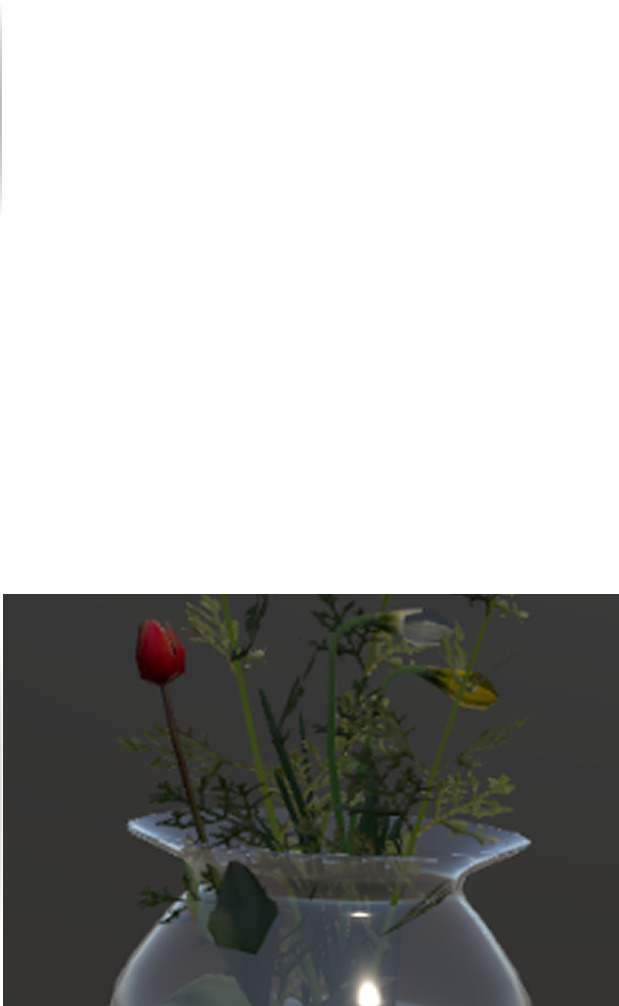
Getting flowers to sit in a vase without pushing each other out took time, and a lot of trial and error with different flowers, colliders, and shapes. A few leaves still clip through the glass, but that's a limitation of VR.
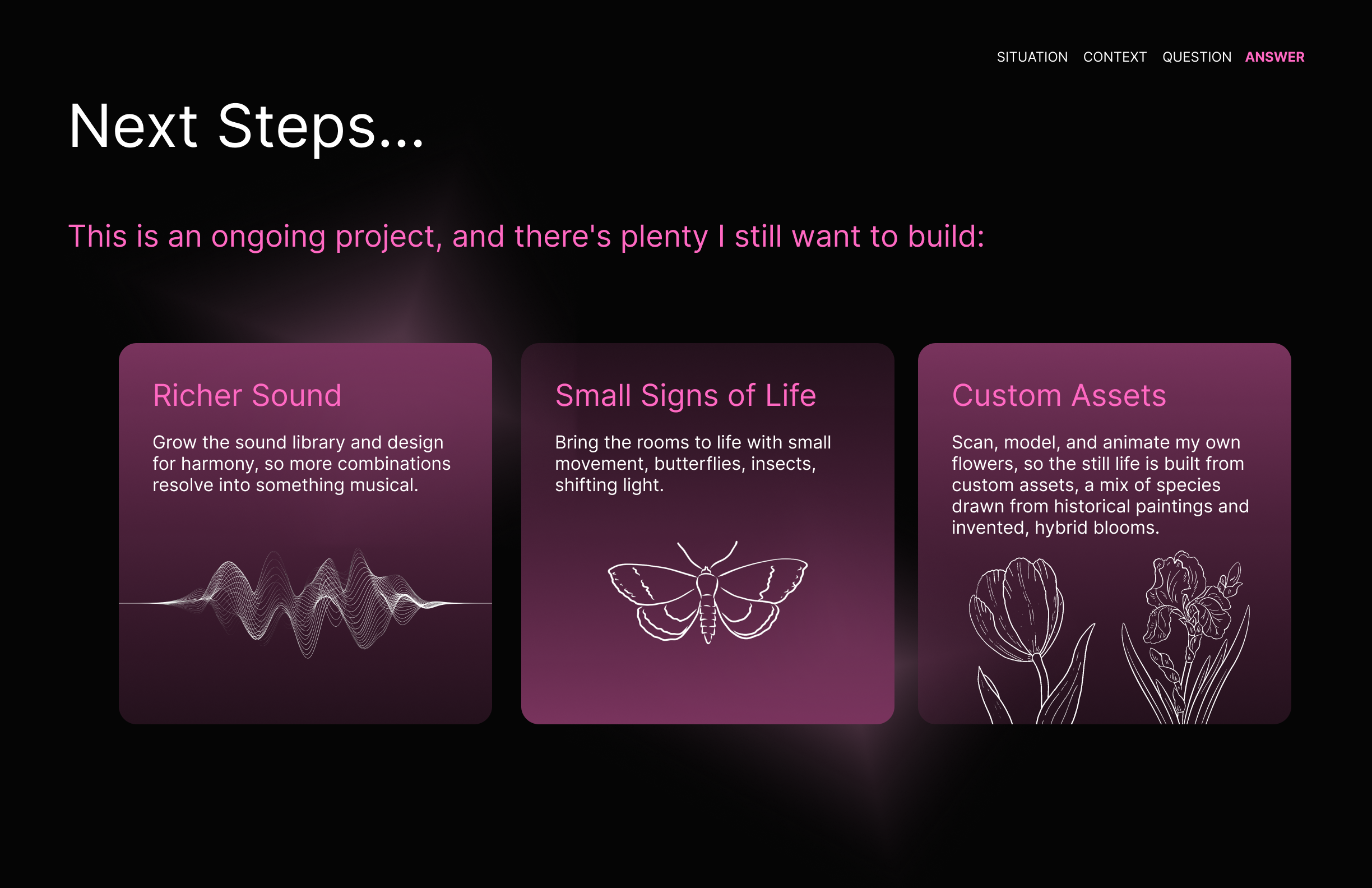
Next Steps...
This is an ongoing project, and there's plenty I still want to build: